Yantra
Retreat
Timber and stone sourced from the surrounding area form the primary structural materials, acknowledging the vernacular architectural traditions of the Portuguese landscape.
Location
Portugal
Year
2015
Category
Retreat
Status
Research
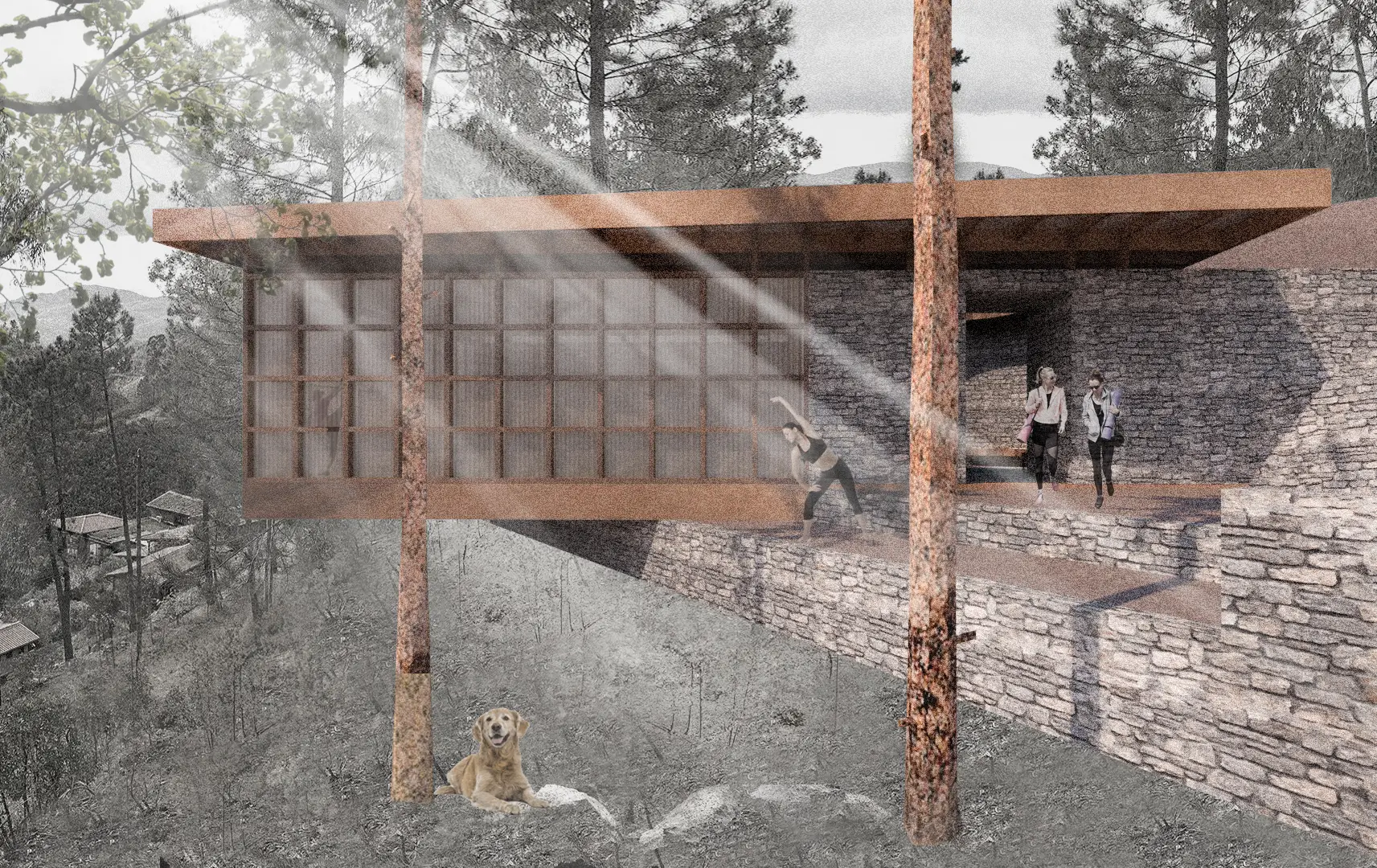
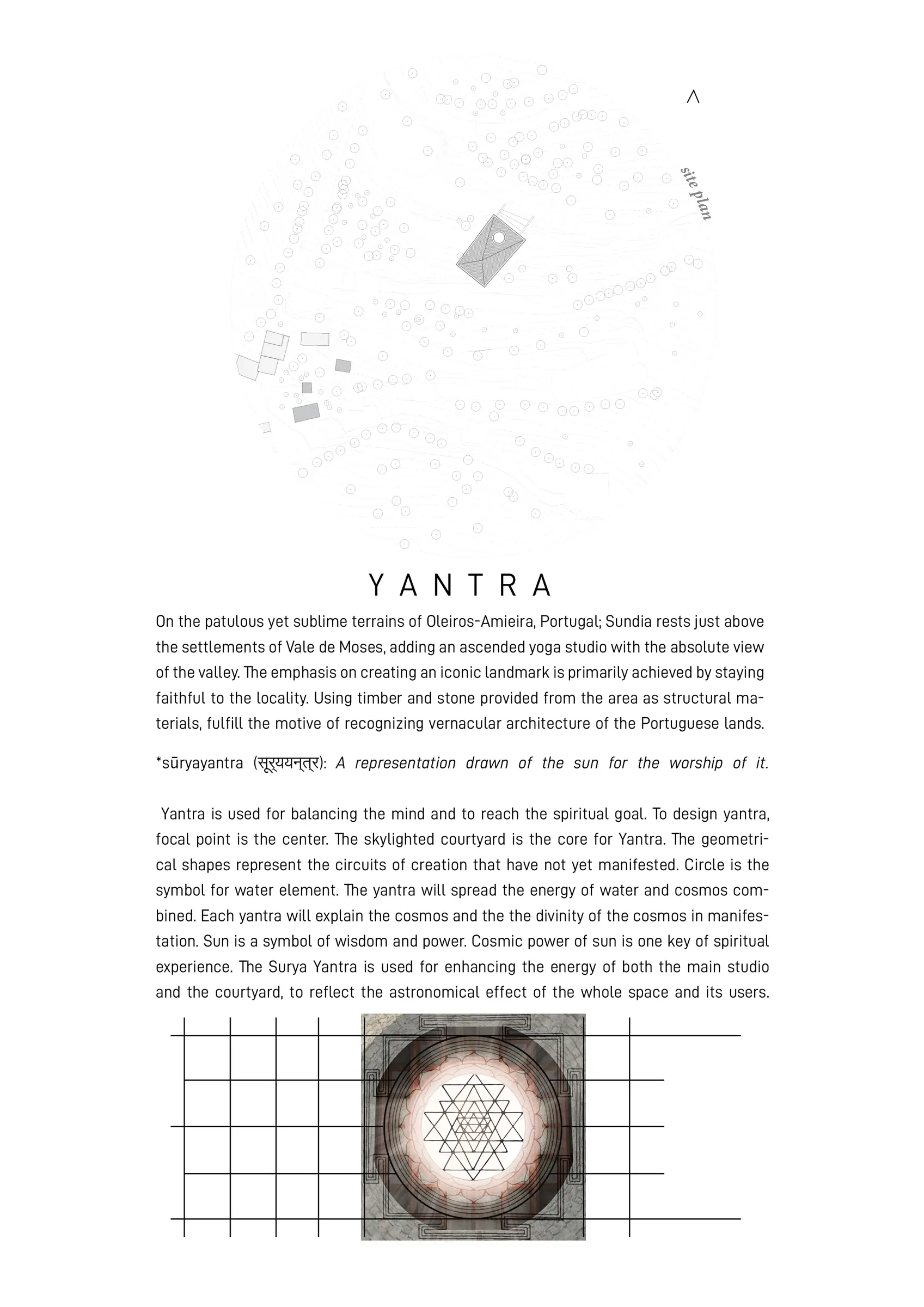
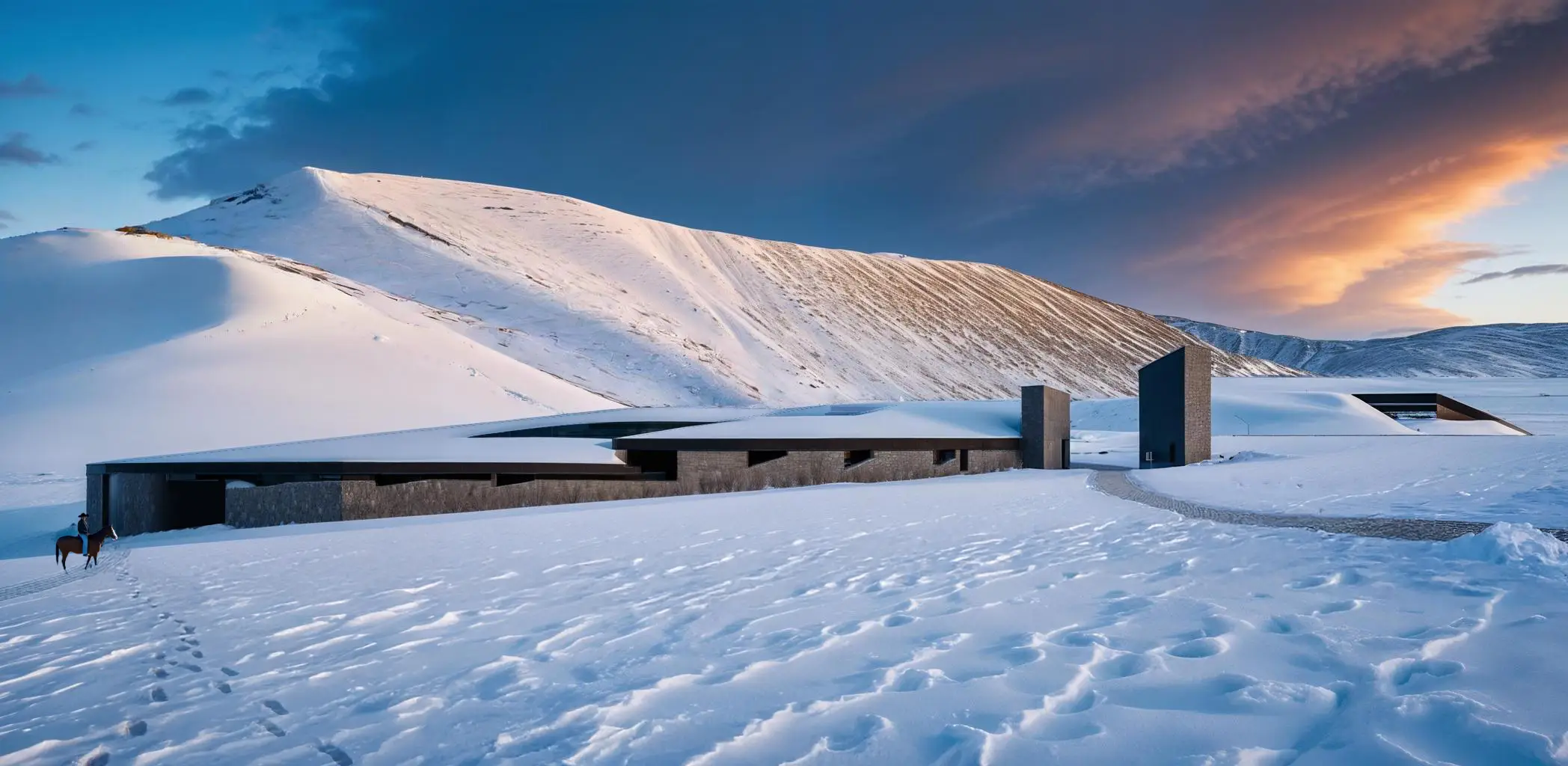
Located on the open yet sublime landscape of Oleiros-Amieira, Portugal, Sundia is positioned just above the settlements of Vale de Moses, introducing an elevated yoga studio overlooking the valley. Rather than emphasizing a monumental presence, the project aims to become an iconic landmark by remaining faithful to the locality. Timber and stone sourced from the surrounding area form the primary structural materials, acknowledging the vernacular architectural traditions of the Portuguese landscape.
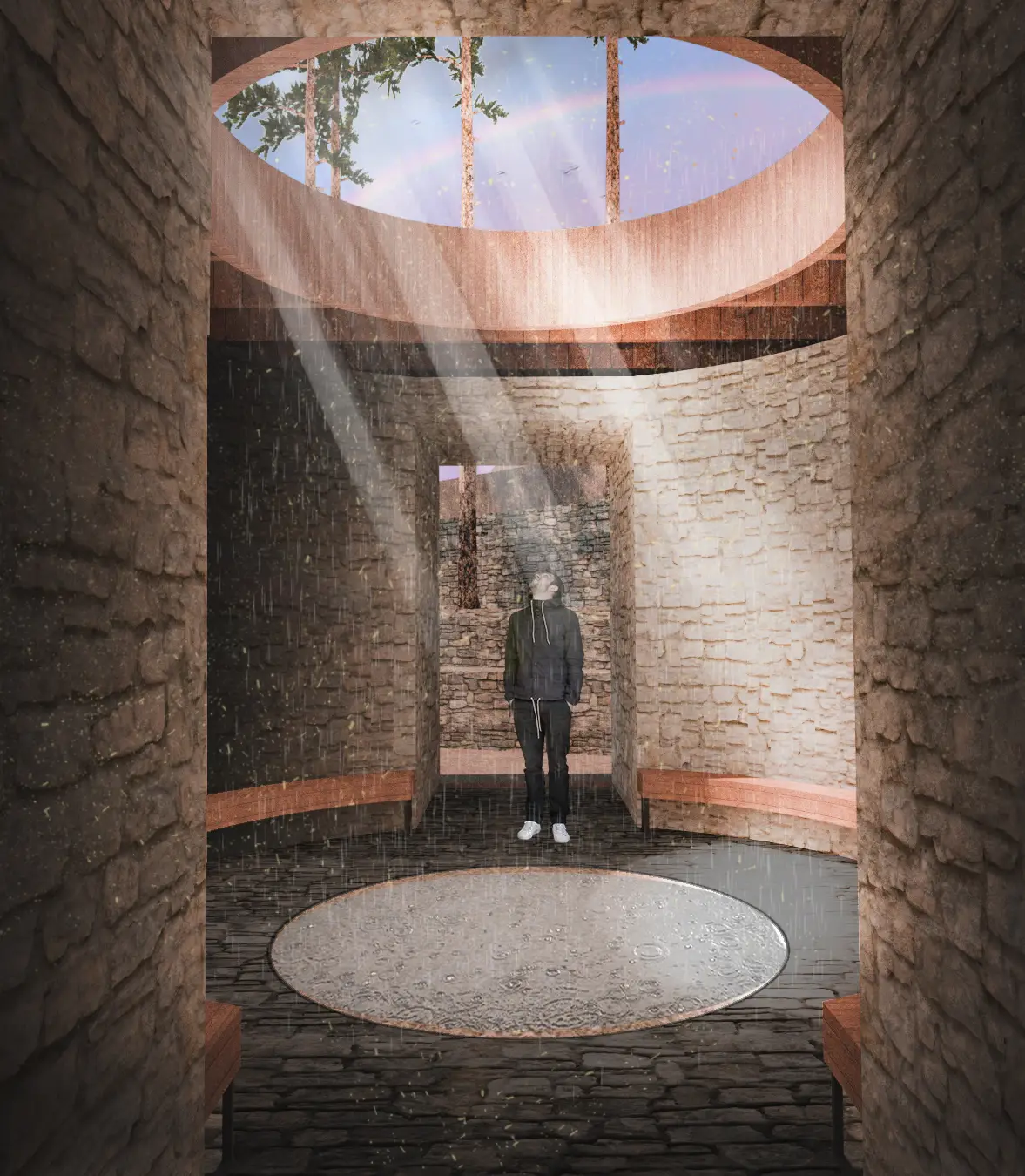
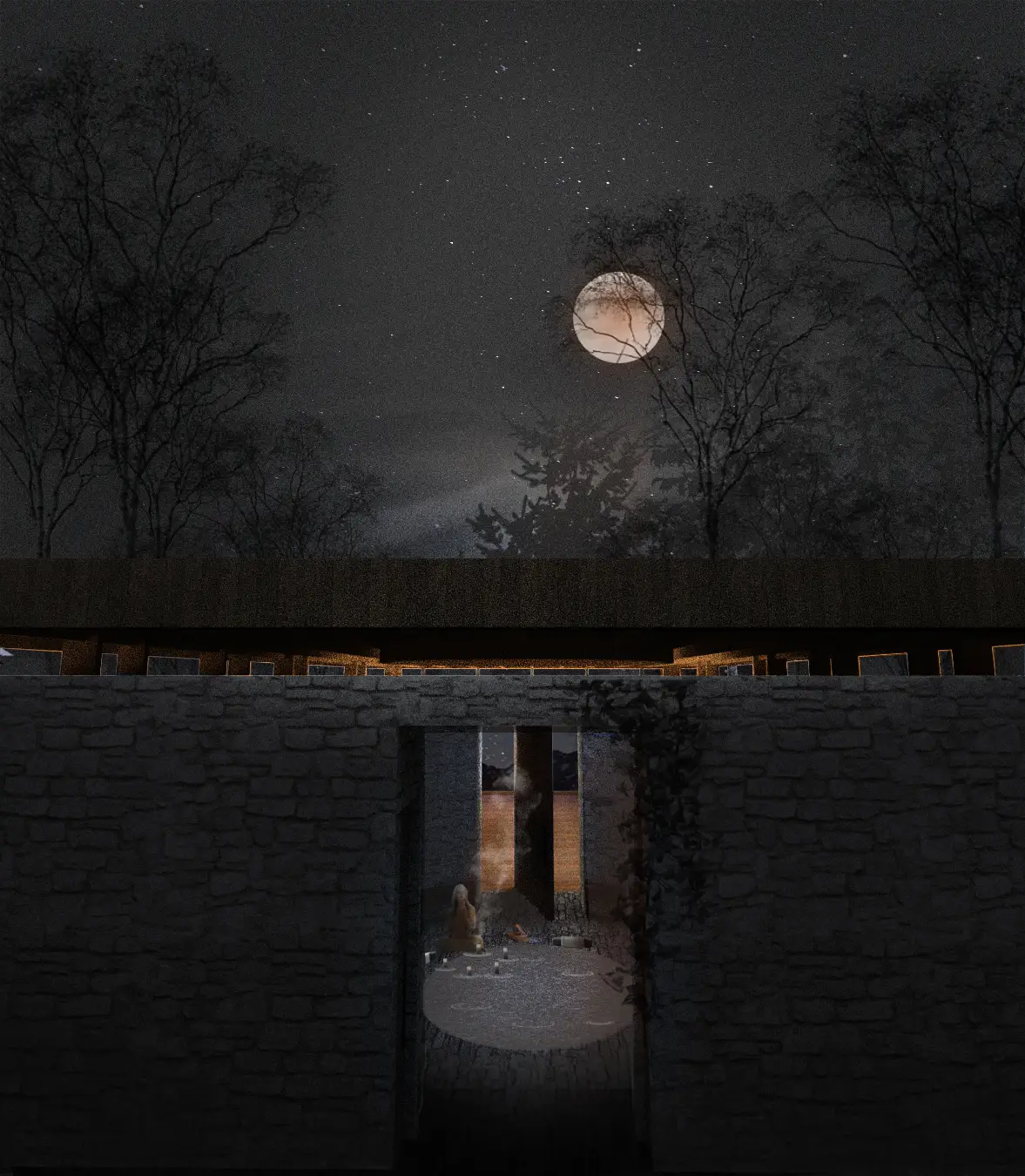
The spatial organization of Sundia is inspired by the concept of the Surya Yantra, a symbolic geometric representation associated with the sun. In yantra design, the center functions as the focal point from which spatial and energetic relationships unfold. In Sundia, this role is taken by a skylit courtyard that forms the core of the building. The geometry surrounding this courtyard refers to cosmological patterns and elemental forces. The circle, representing the water element, reinforces the relationship between water, light, and cosmic energy. Through this arrangement, the courtyard and the main studio are envisioned as spaces where spatial experience and spiritual reflection intersect.
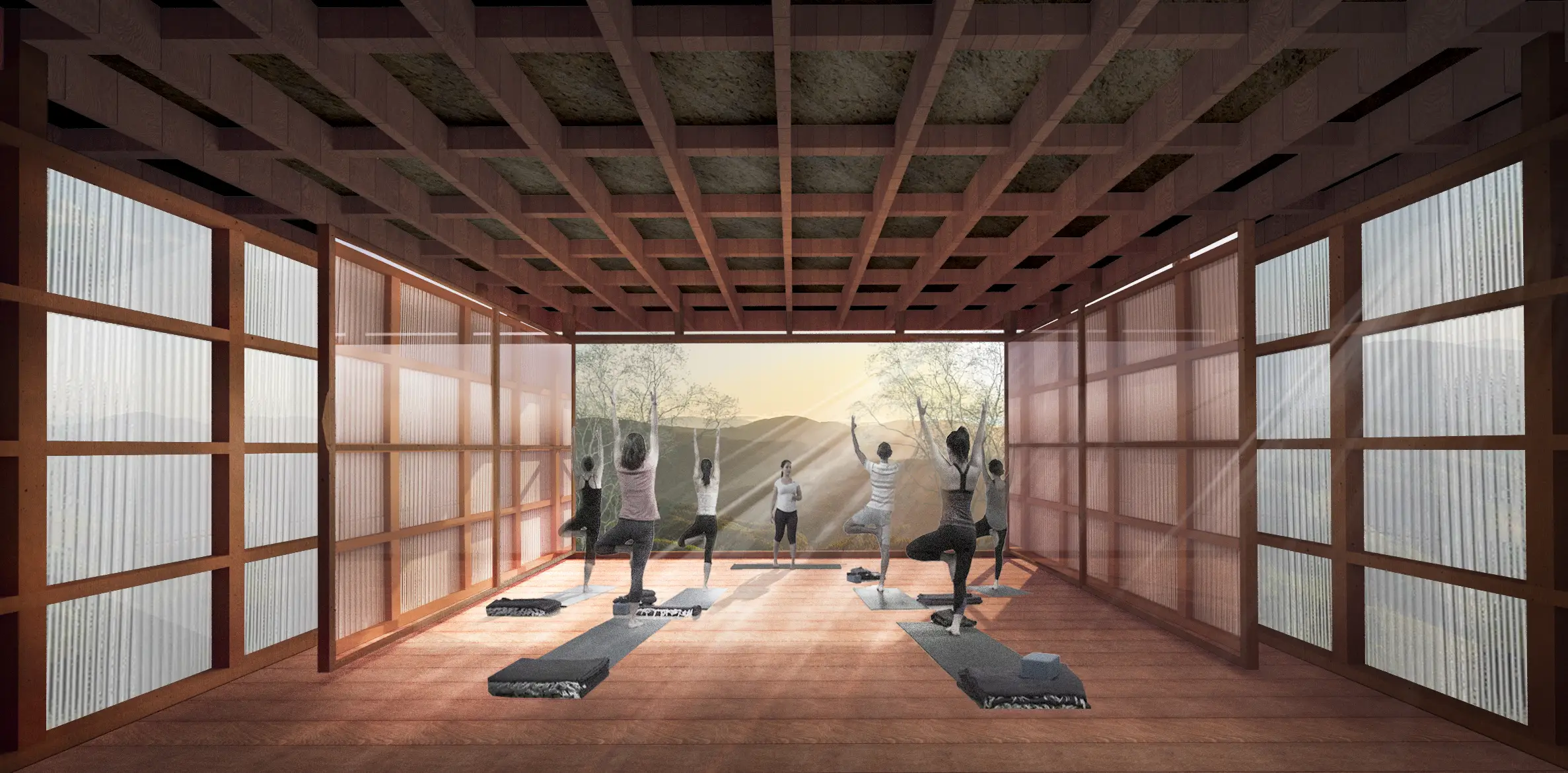
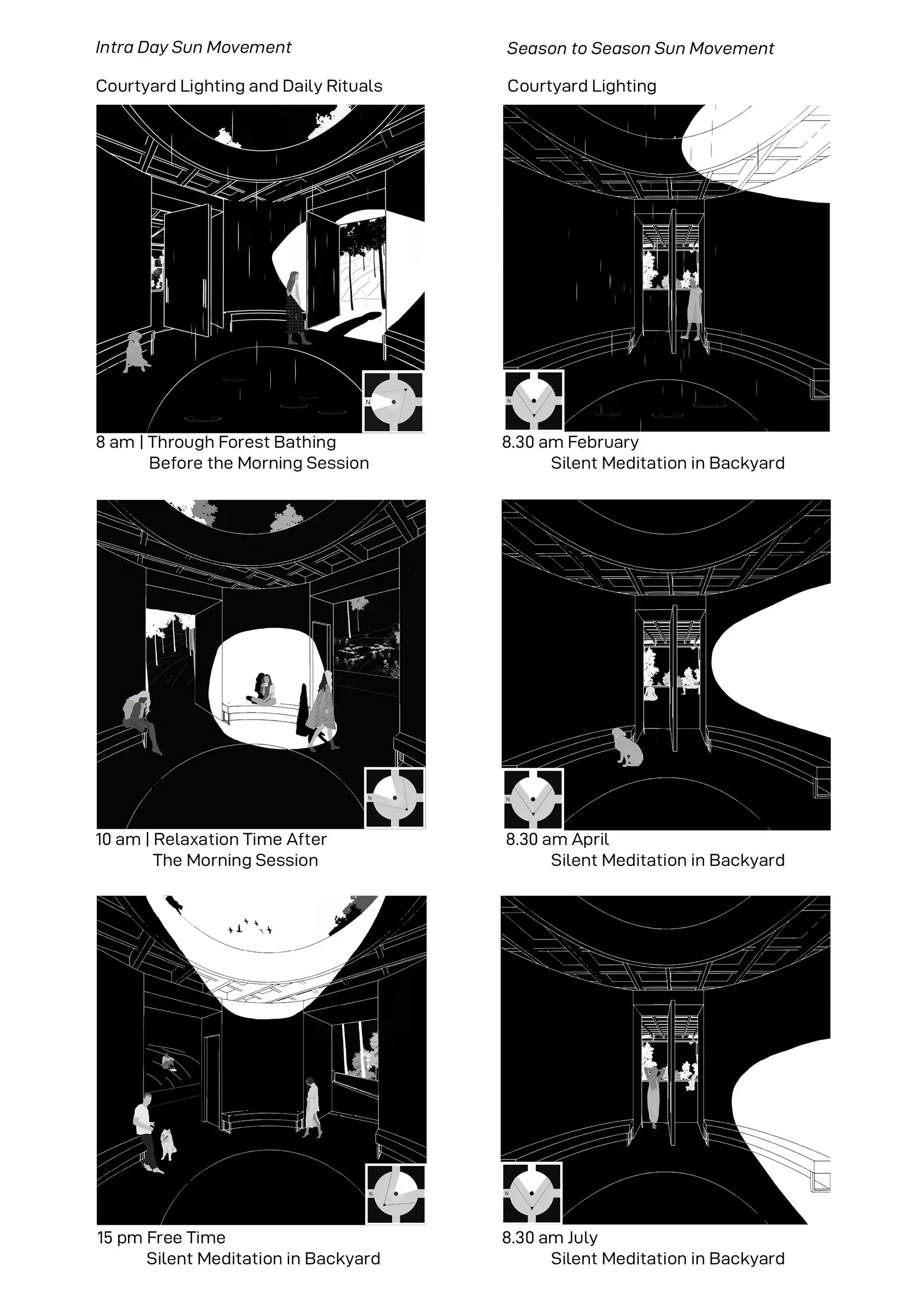
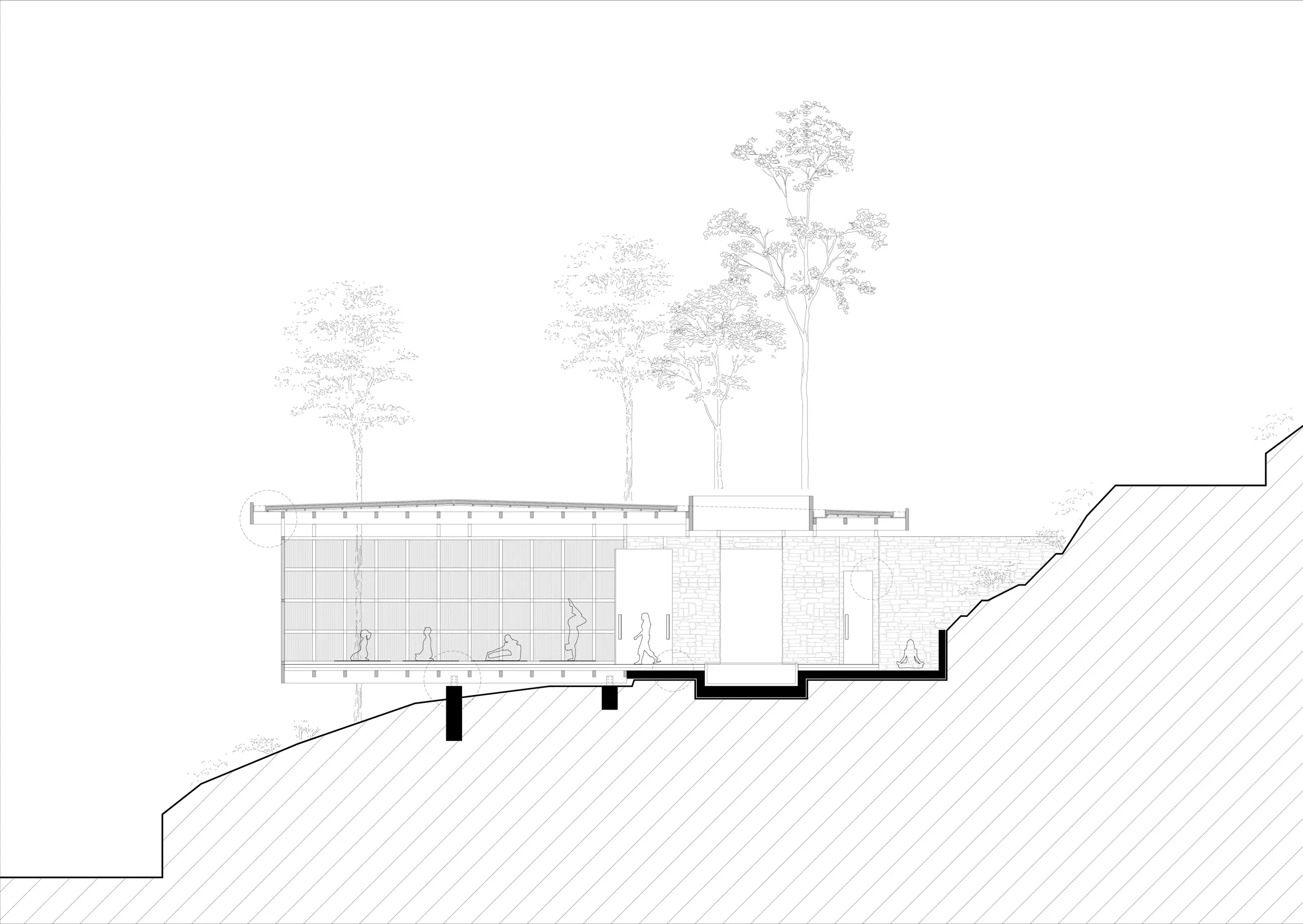
Sundia sits lightly on the terrain, aligned precisely along the east–west axis to create a subtle awareness of time throughout the day. A skylight opening above the courtyard enhances this experience by allowing natural light to trace the movement of the sun across the space.
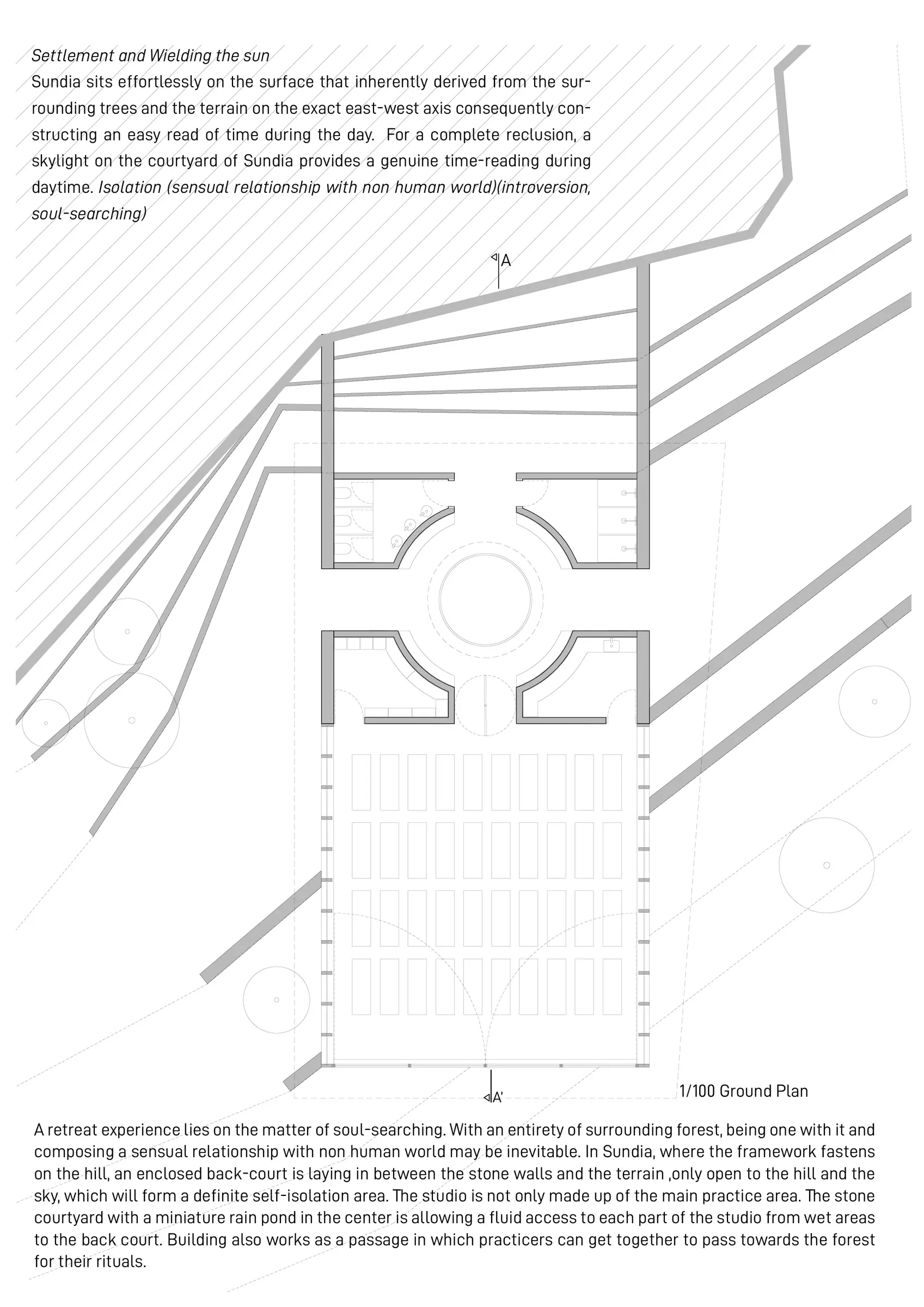
The retreat emphasizes introspection and a sensory relationship with the surrounding forest. A secluded stone courtyard, positioned between the terrain and enclosing walls and open only to the sky and hillside, offers a space for solitude and reflection. Circulation flows fluidly through the building, linking the main studio, wet areas, and outdoor spaces, while also functioning as a passage leading practitioners toward the forest.
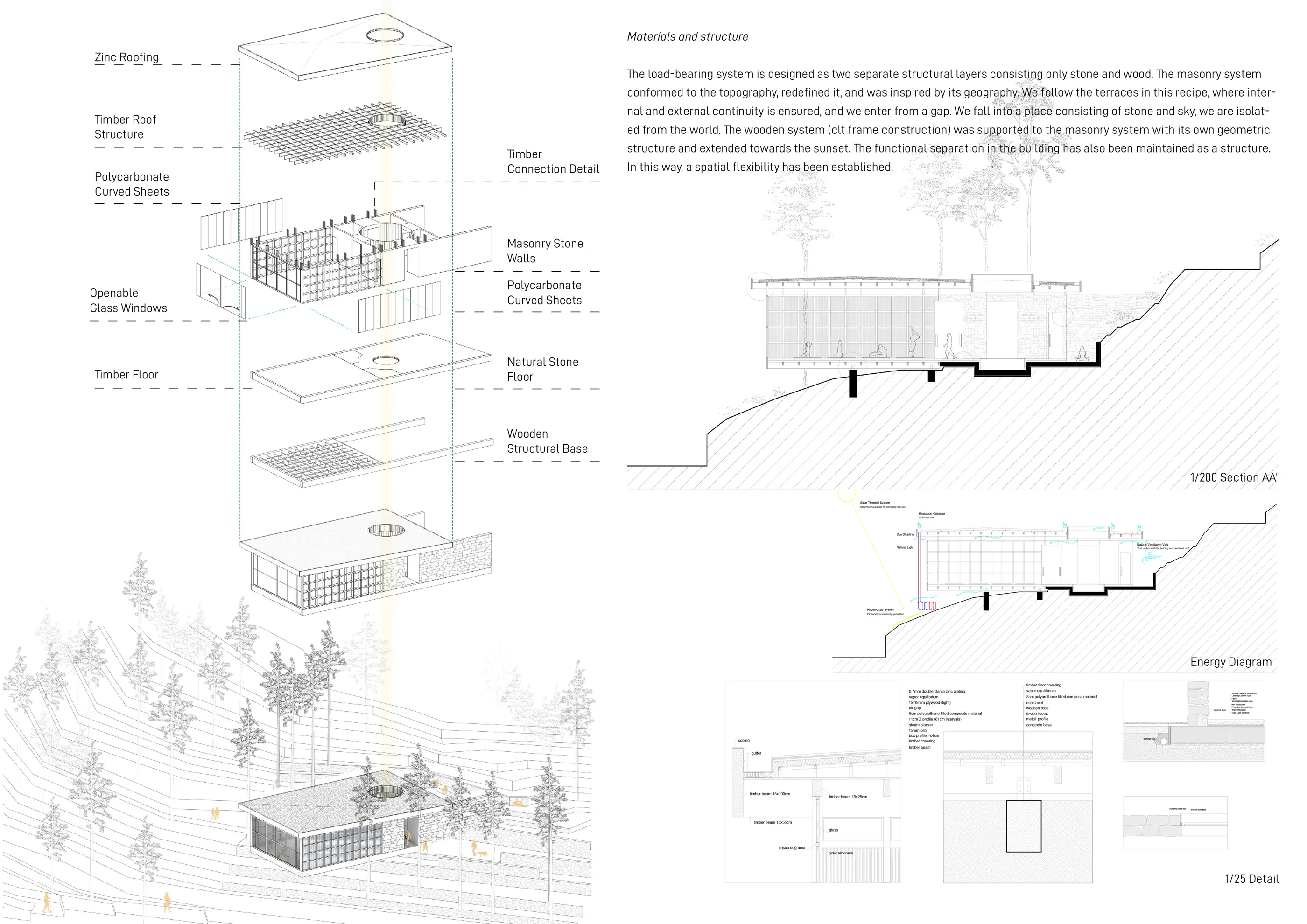
Structurally, the building is composed of two layers: a stone masonry system that follows and redefines the topography, and a CLT timber frame that extends toward the sunset. This dual system allows structural clarity while enabling spatial flexibility within the studio.
Read more