Who Owns The City?
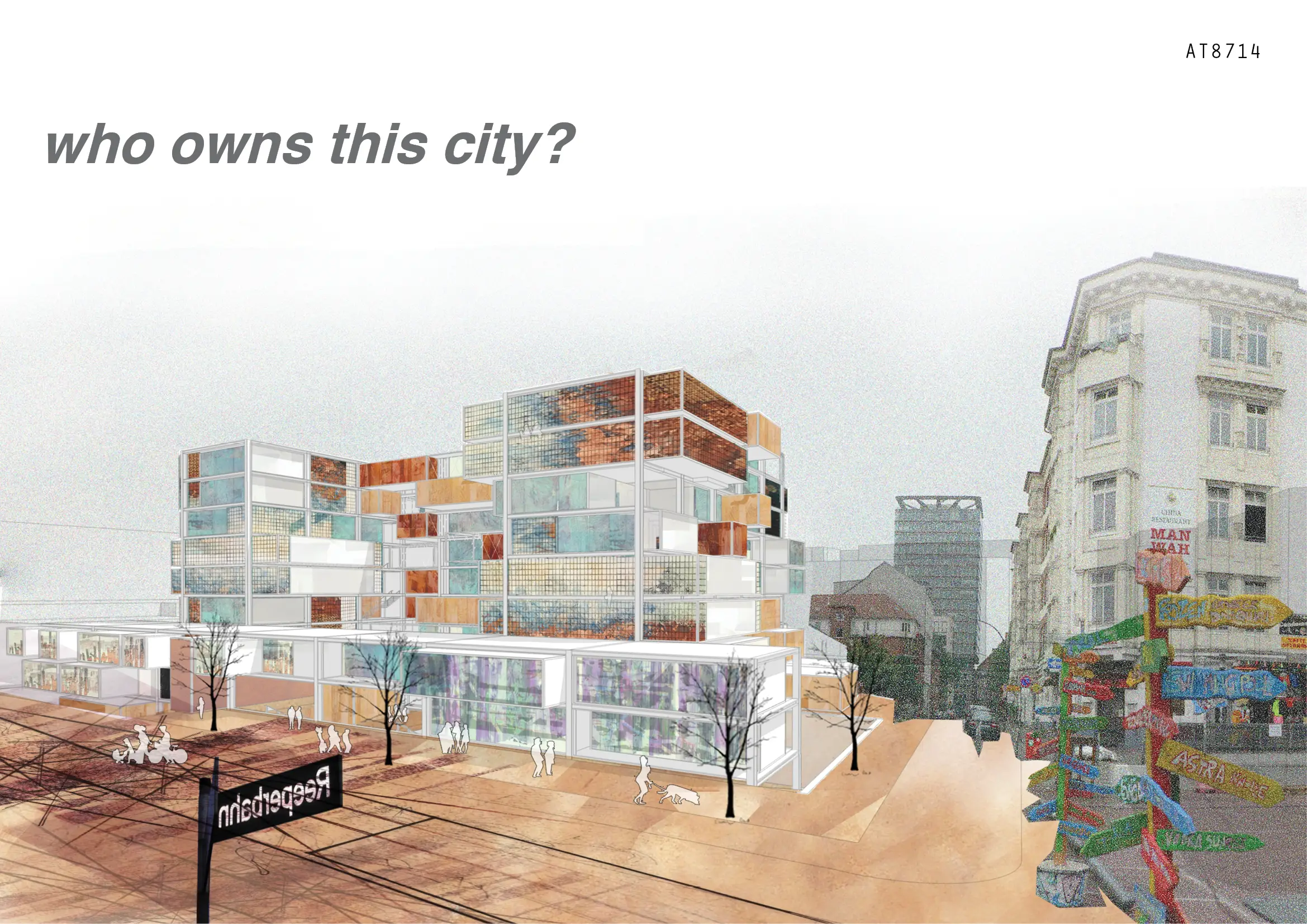
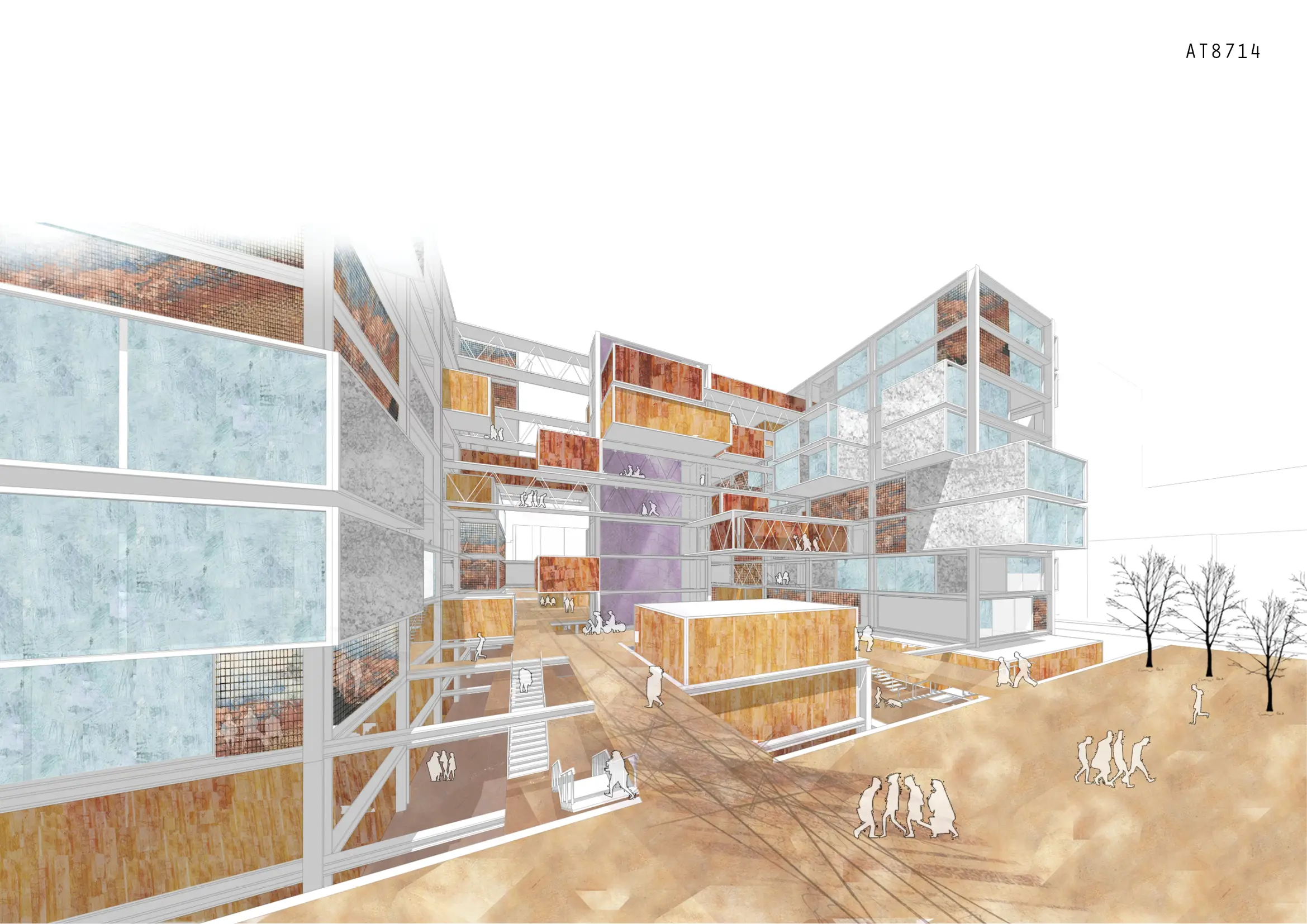
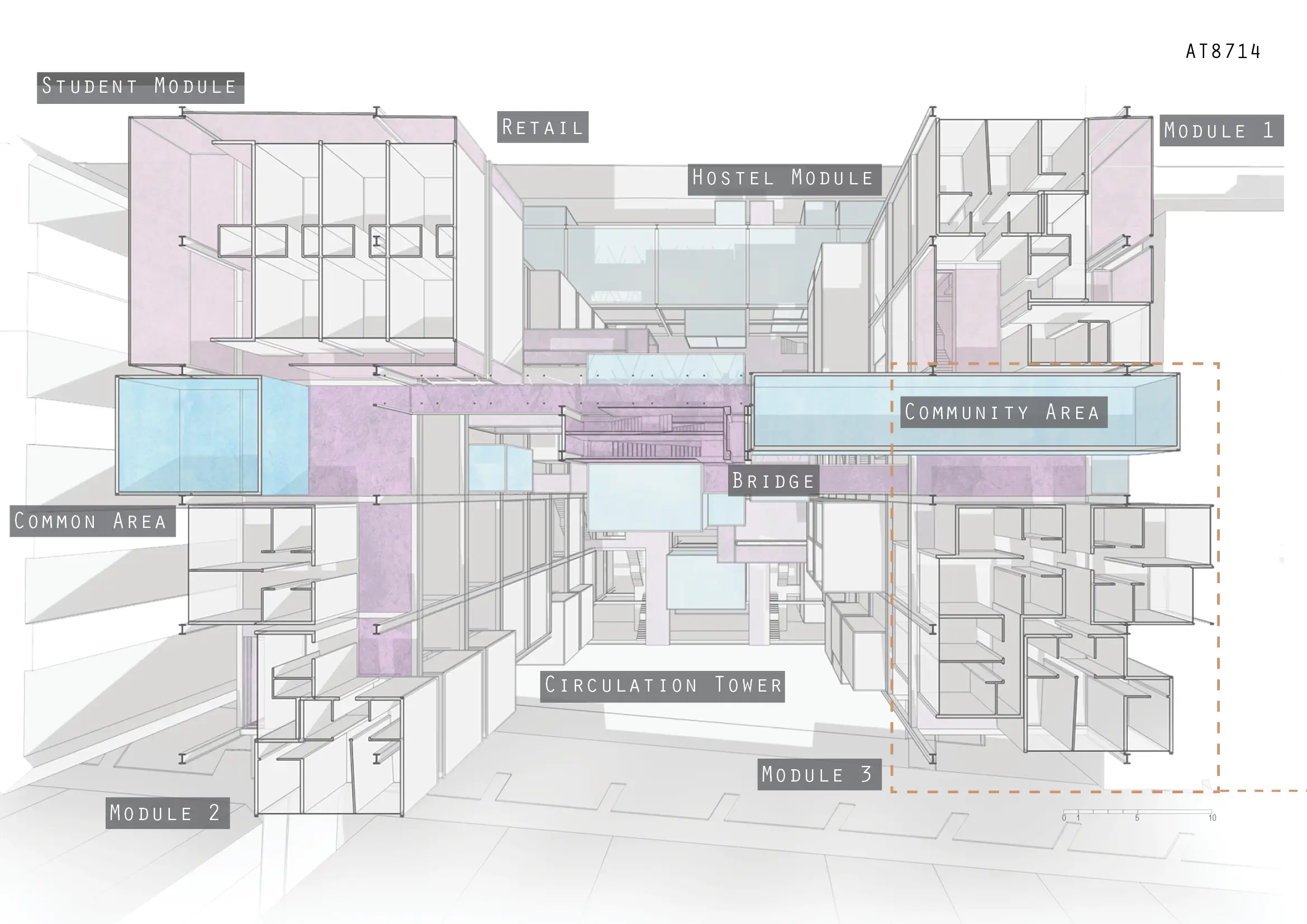
The design re-establishes spatial connections between the housing blocks and the square through public courtyards and vertical modules that function as energy transport systems and shared community spaces.
Location
Hamburg, Germany
Year
2015
Status
Research
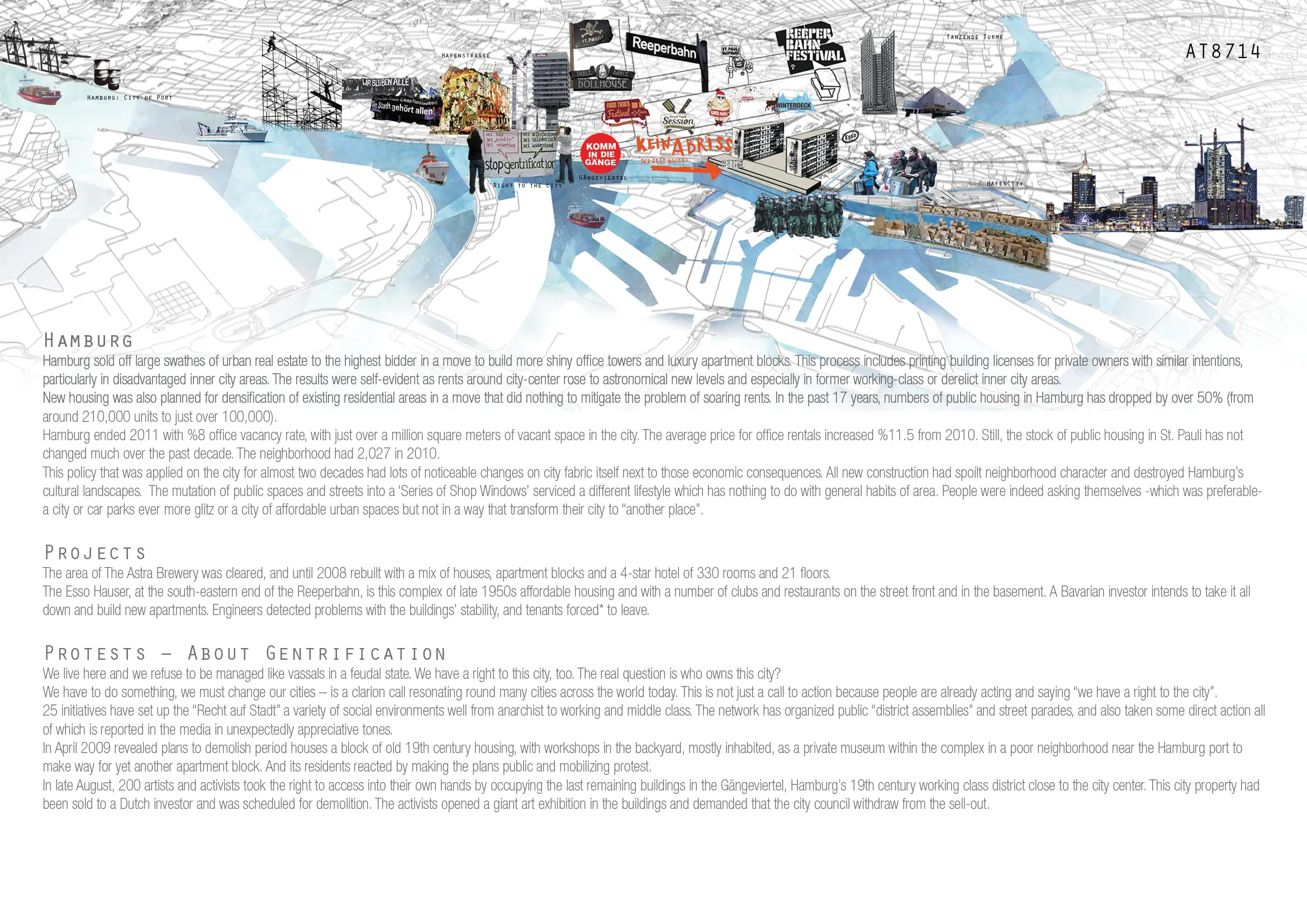
Over the past two decades, Hamburg has sold large portions of urban real estate to private investors, encouraging the construction of office towers and luxury housing developments. Building permits were widely granted in inner-city areas, particularly in disadvantaged neighborhoods. As a result, rents around the city center increased dramatically while the number of public housing units declined significantly. In the last seventeen years, public housing in Hamburg dropped by more than 50 percent, from around 210,000 units to just over 100,000.
Despite the growing demand for housing, Hamburg ended 2011 with an office vacancy rate of approximately 8 percent, corresponding to more than one million square meters of empty office space. Meanwhile, neighborhoods such as St. Pauli experienced rising rents and increasing development pressure.
These policies transformed not only the city’s economy but also its urban fabric. New developments often disrupted the existing neighborhood character and replaced everyday public spaces with commercialized environments. Streets gradually turned into a “series of shop windows,” promoting lifestyles disconnected from the social and cultural habits of the area.
One of the most significant examples of this transformation is the Esso Häuser complex near Reeperbahn. Built in the late 1950s as affordable housing with street-level clubs and restaurants, the complex was later scheduled for demolition by a private investor. Structural problems forced tenants to leave, triggering protests against gentrification across the city.
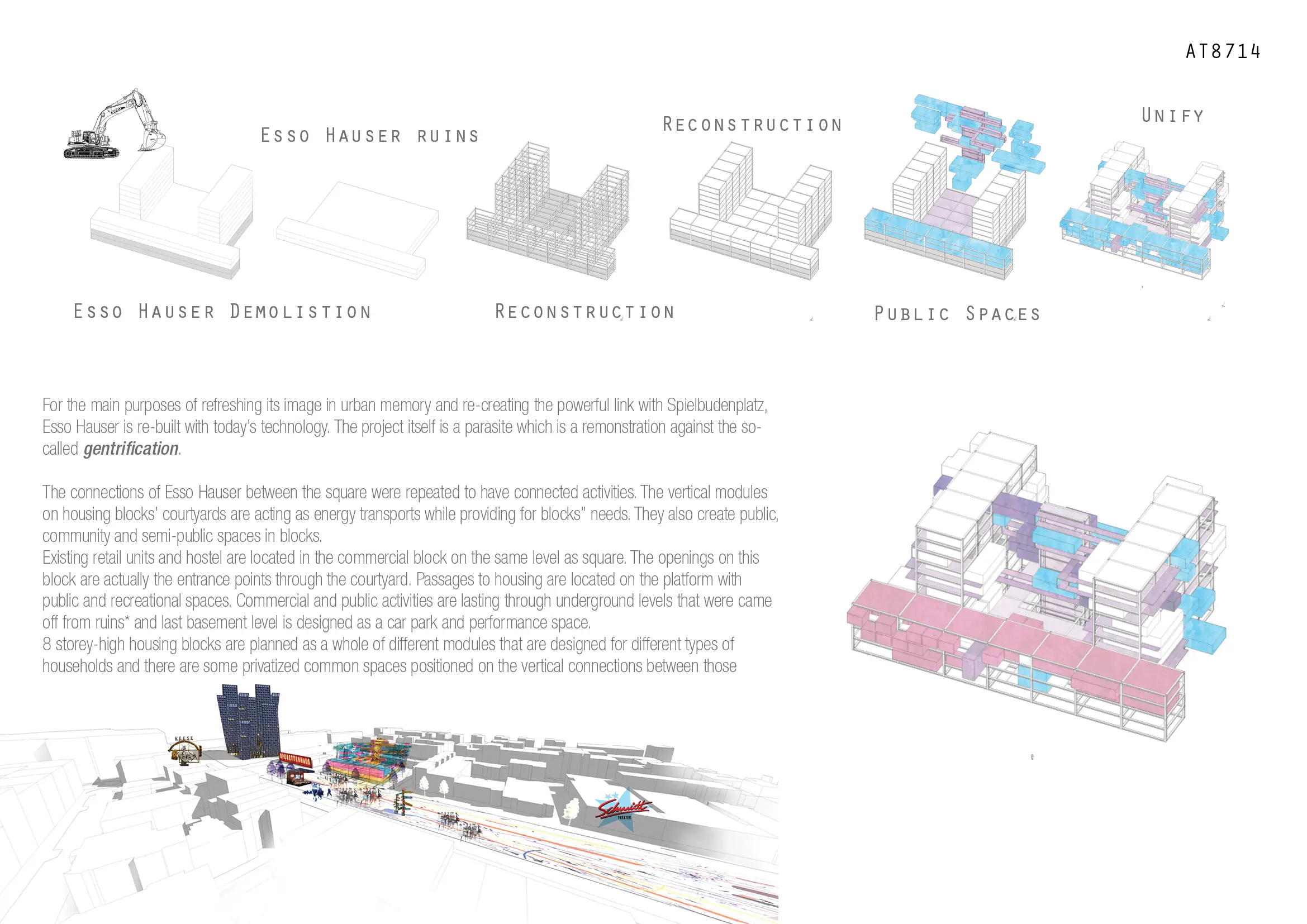
The project proposes a critical architectural response to this process. Esso Häuser is reinterpreted and reconstructed using contemporary technologies while maintaining its connection to Spielbudenplatz and its place within the collective urban memory. Acting as a “parasite” structure, the proposal challenges the logic of gentrification.
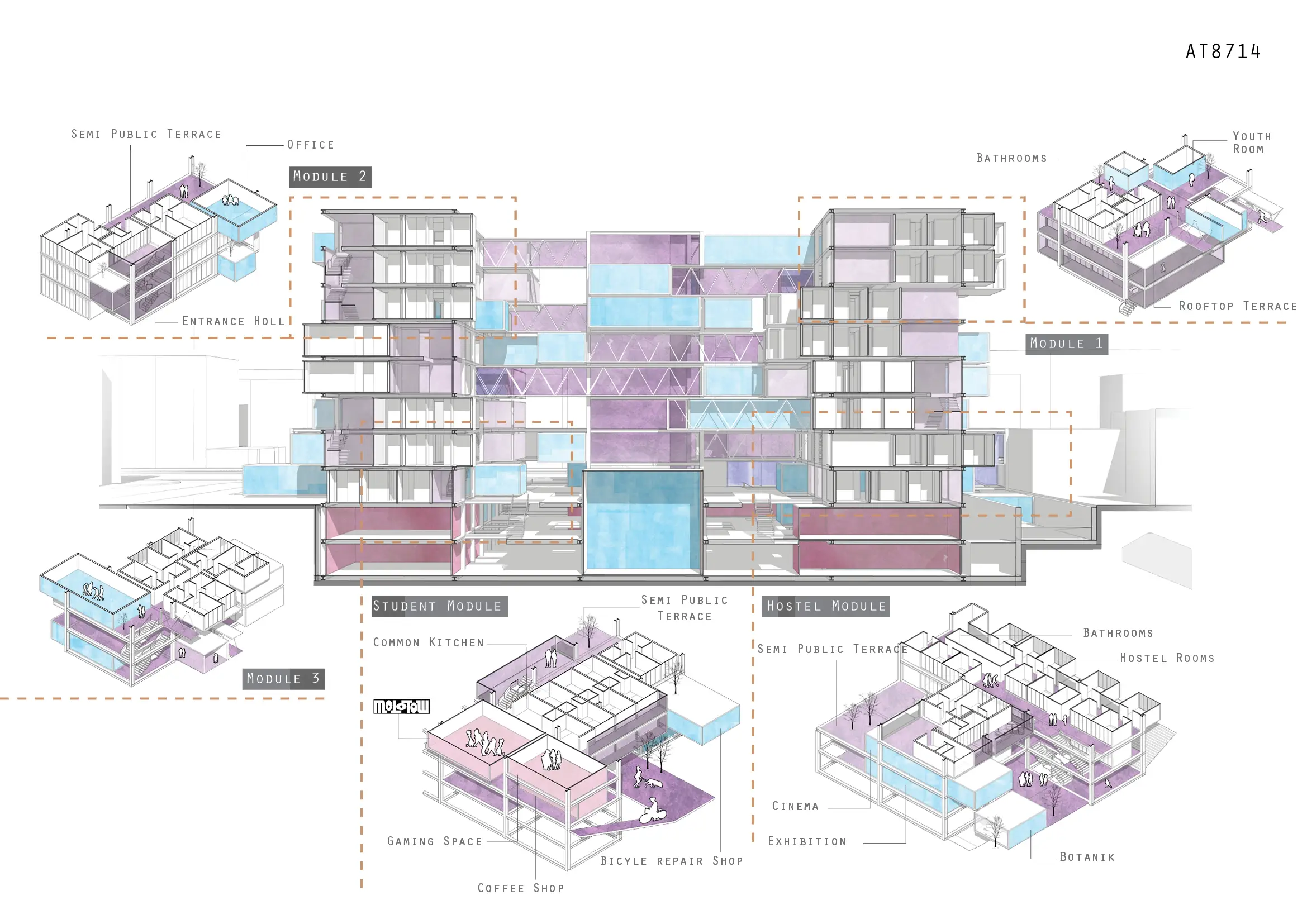
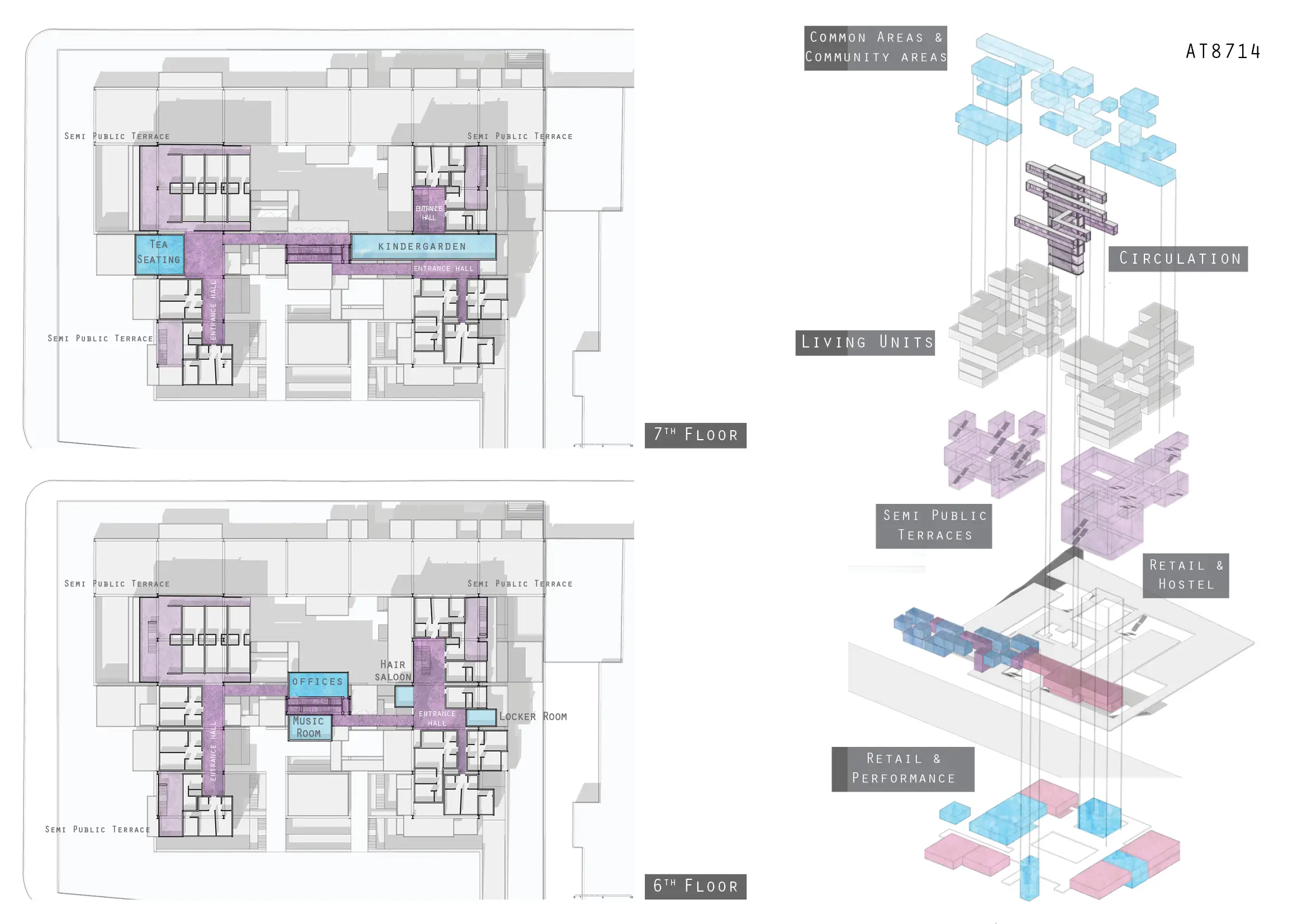
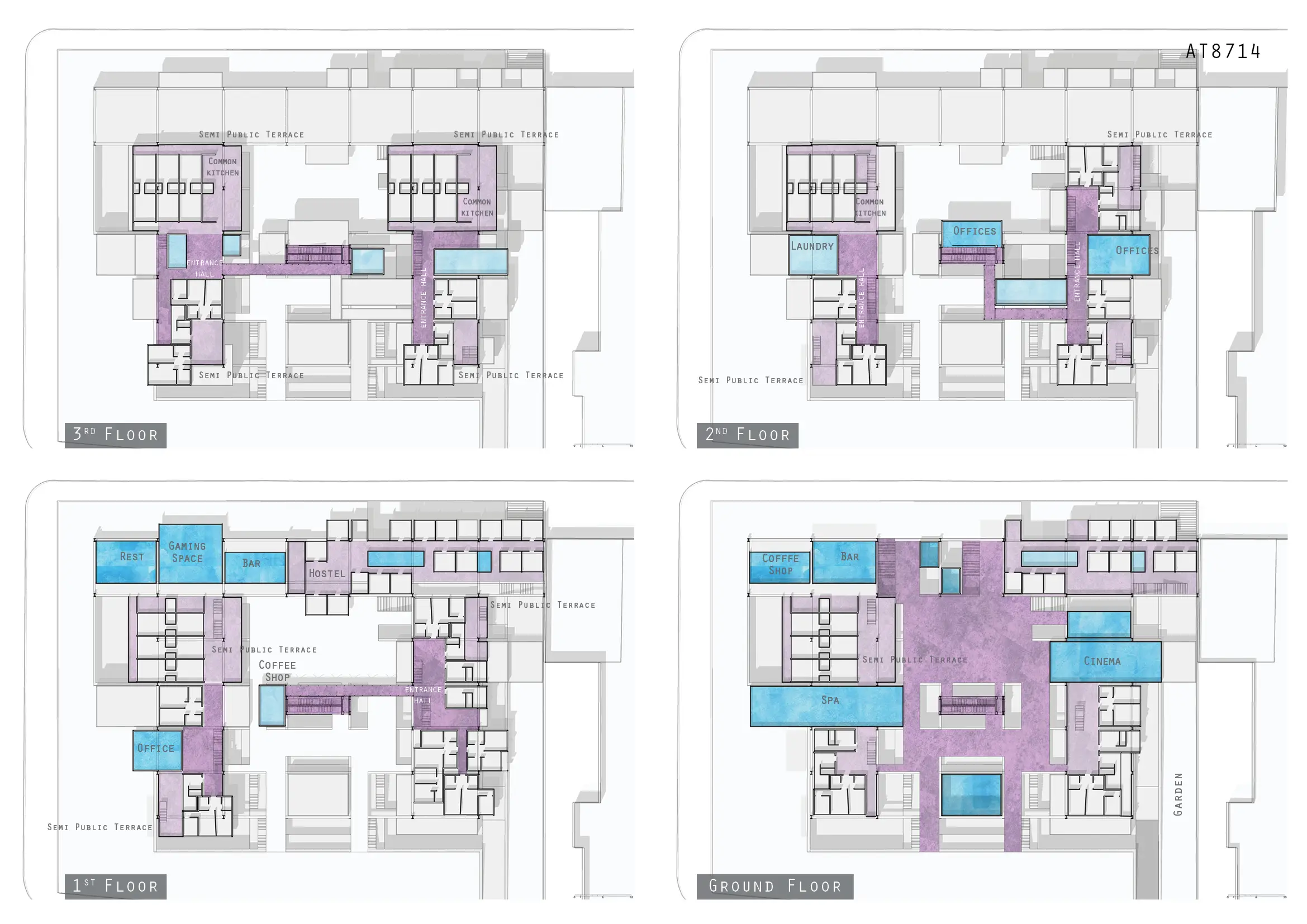
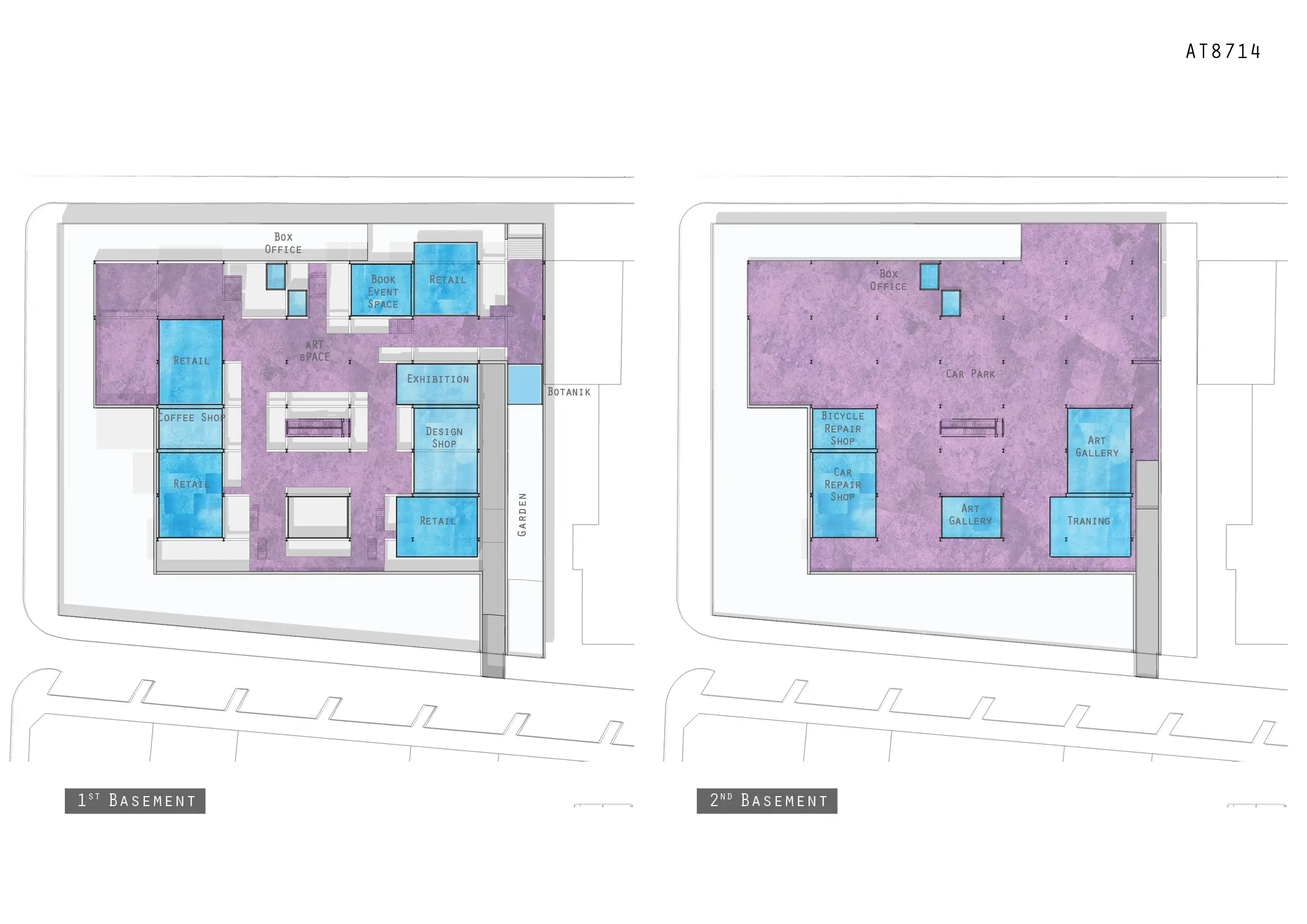
The design re-establishes spatial connections between the housing blocks and the square through public courtyards and vertical modules that function as energy transport systems and shared community spaces. Retail units remain at the square level, while residential circulation begins from an elevated platform with public and recreational areas.
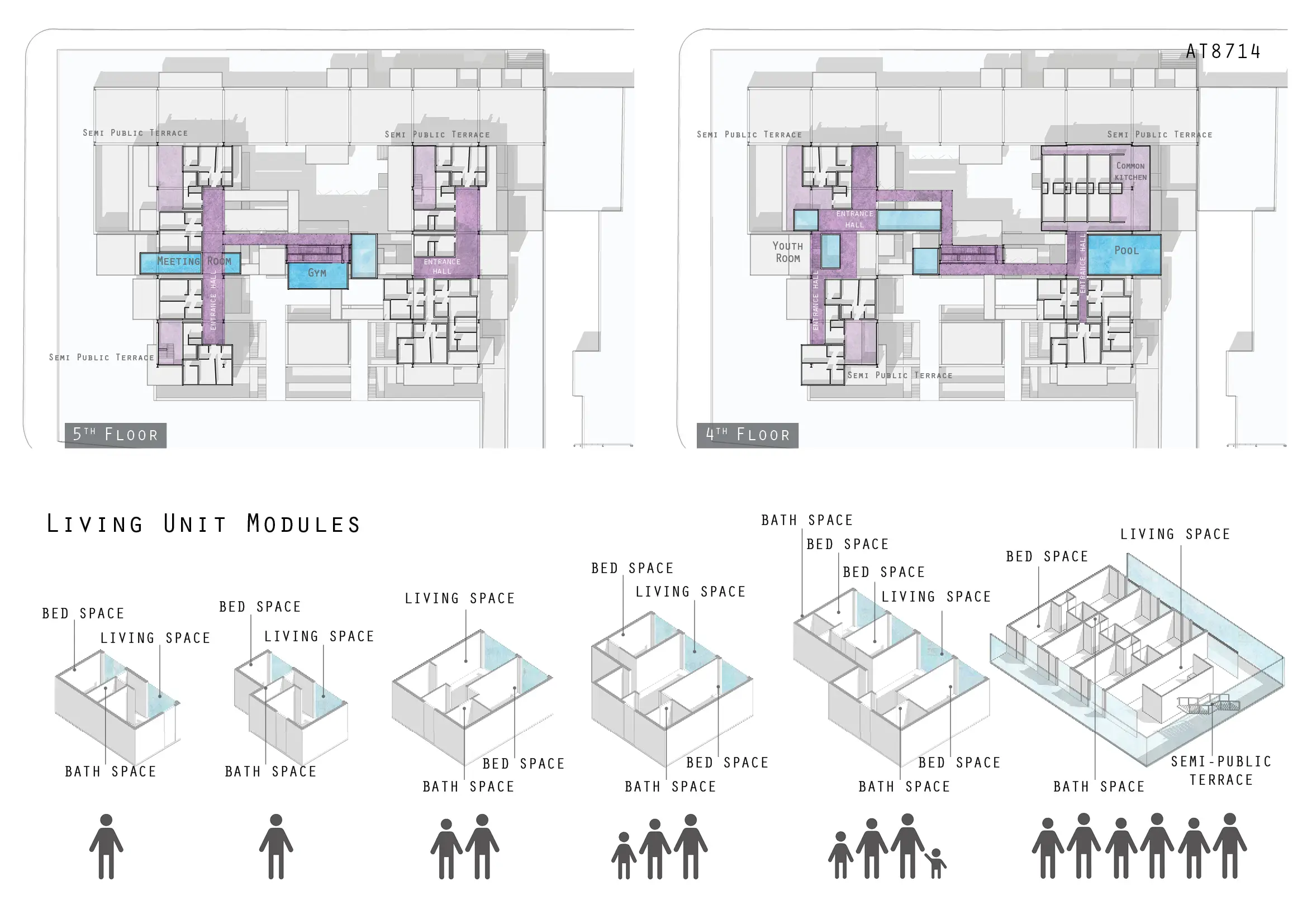
The housing blocks rise eight storeys and consist of modular units designed for different household types. Semi-private shared spaces positioned along vertical circulation encourage interaction between residents while maintaining a balance between collective and individual living.
Read more