Sense of The Space
Cultural
Space has more than the three dimensions that the human being can perceive.
Location
Italy
Year
2016
Category
Cultural
Status
Research
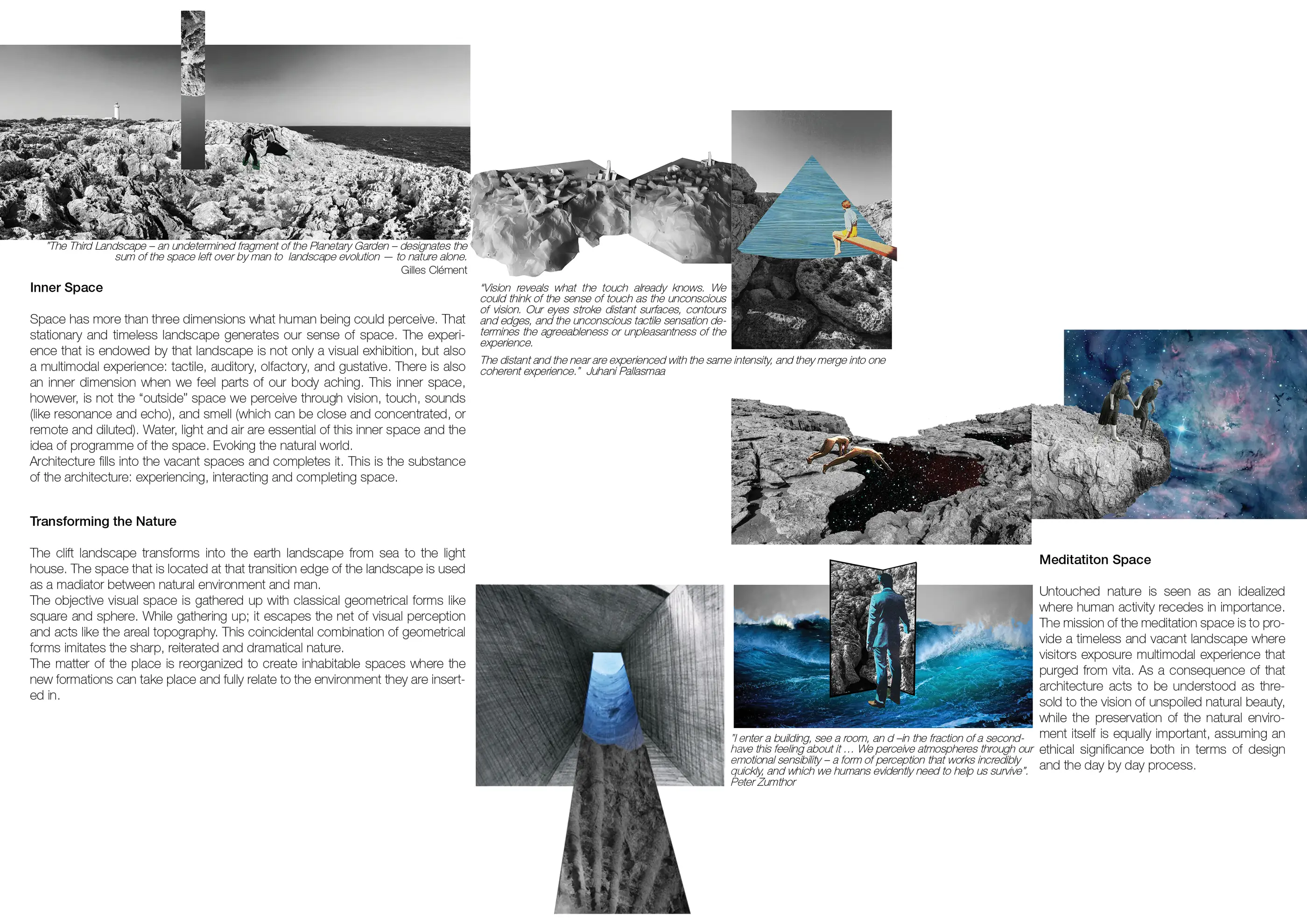
“The Third Landscape – an undetermined fragment of the Planetary Garden – designates the sum of the space left over by man to landscape evolution — to nature alone.”
— Gilles Clément
“Vision reveals what the touch already knows. We could think of the sense of touch as the unconscious of vision. Our eyes stroke distant surfaces, contours and edges, and the unconscious tactile sensation determines the agreeableness or unpleasantness of the experience. The distant and the near are experienced with the same intensity, and they merge into one coherent experience.”
— Juhani Pallasmaa
Space has more than the three dimensions that the human being can perceive. This stationary and timeless landscape generates our sense of space. The experience provided by such a landscape is not merely visual; it is multimodal. Tactile, auditory, olfactory, and even gustatory sensations shape the way we understand and inhabit space.
There is also an inner dimension of perception — the internal awareness of the body itself. This inner space differs from the external environment we perceive through vision, sound, touch, and smell. Elements such as water, light, and air become essential components of this inner spatial experience and inform the programmatic idea of the project by evoking the natural world.
Architecture occupies and completes the vacant spaces of the landscape. Its substance lies in experiencing, interacting with, and completing space.
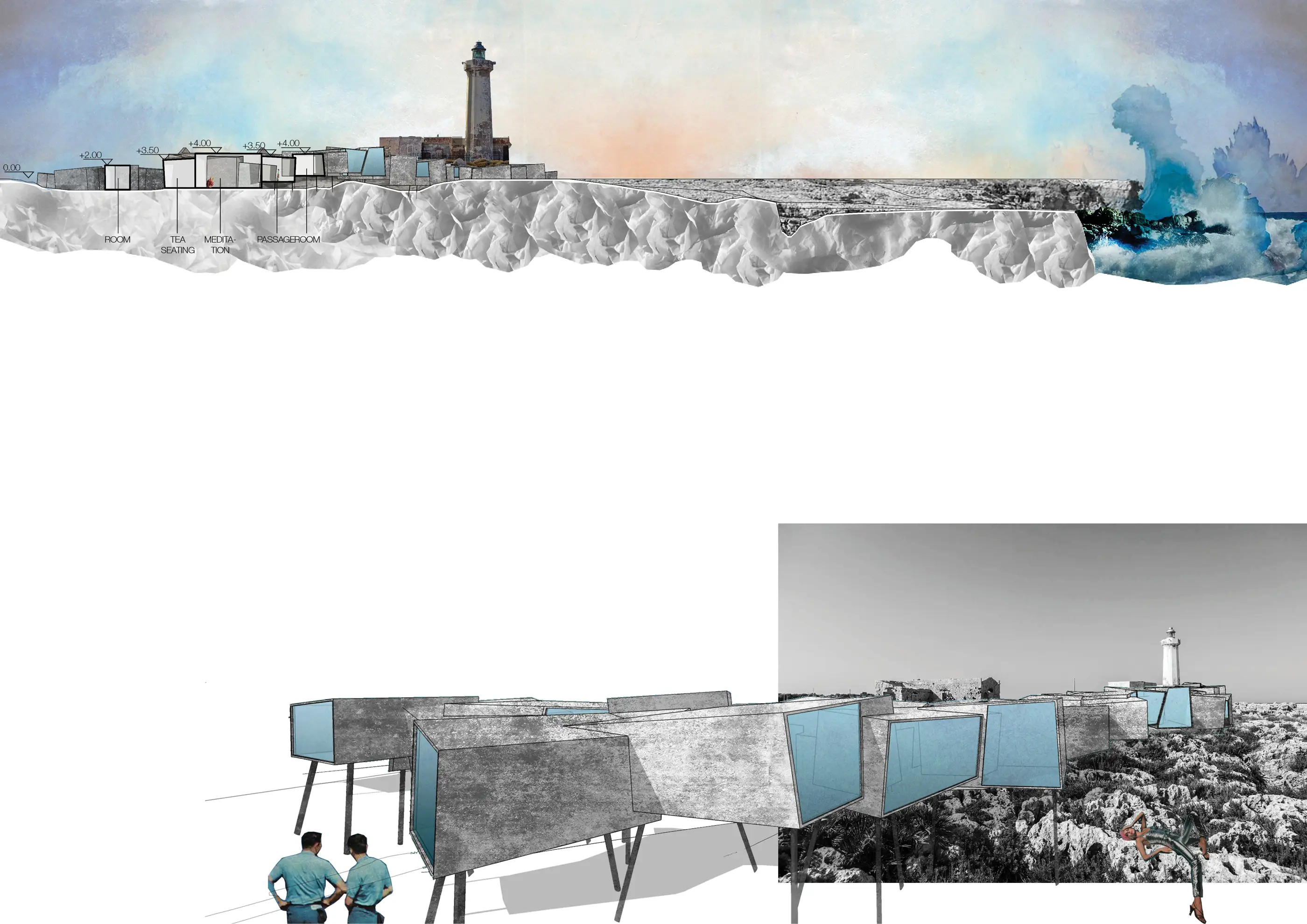
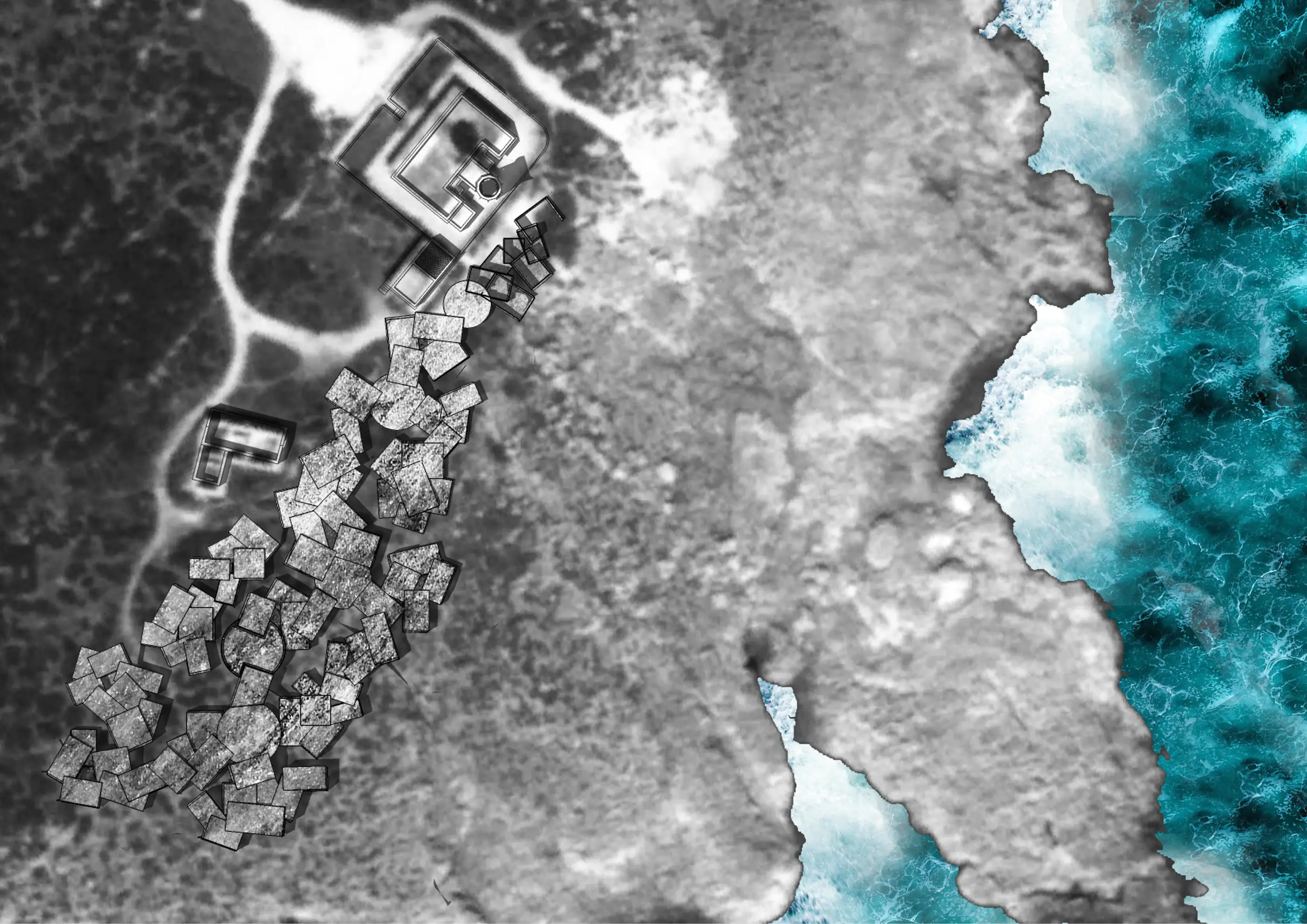
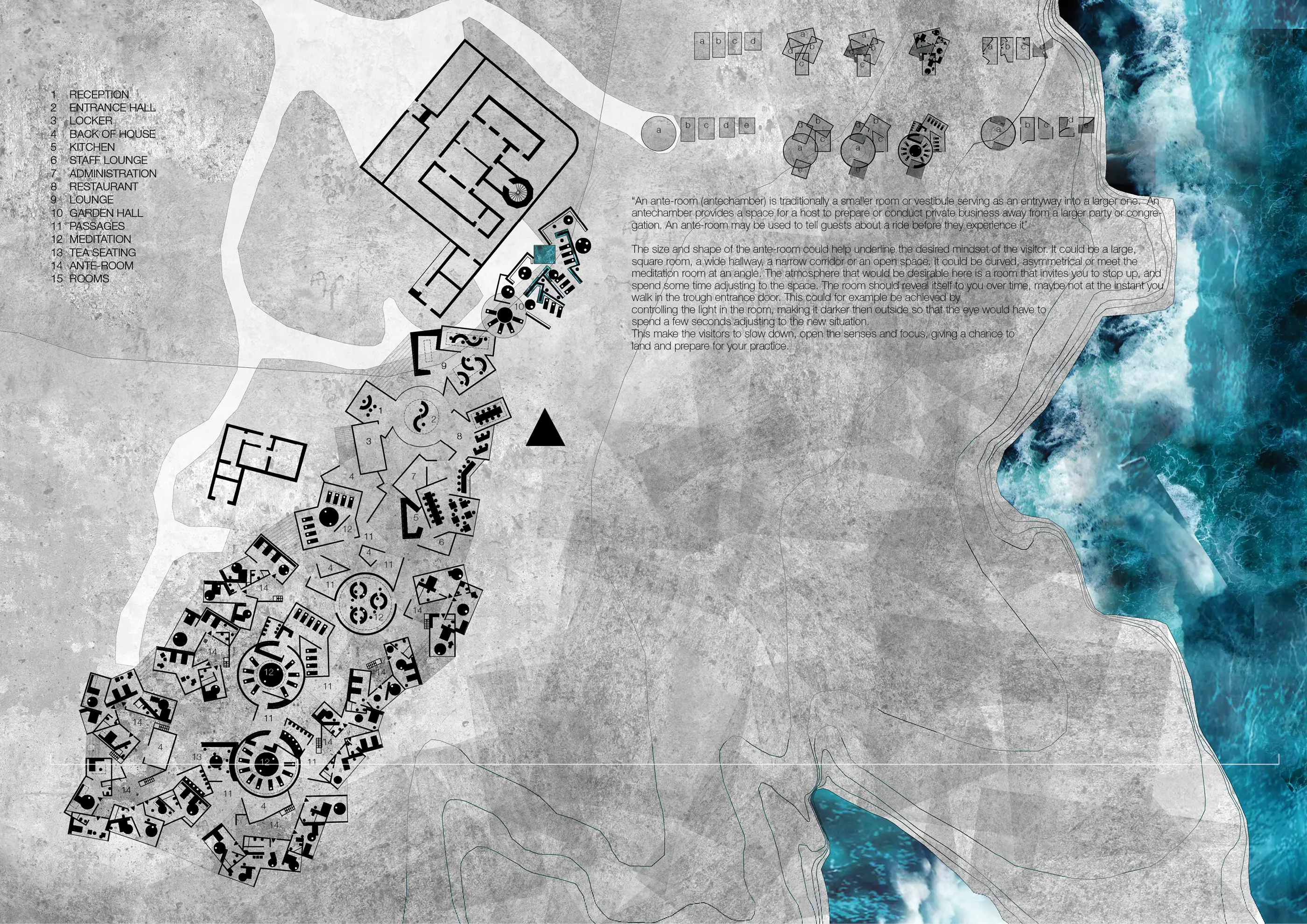
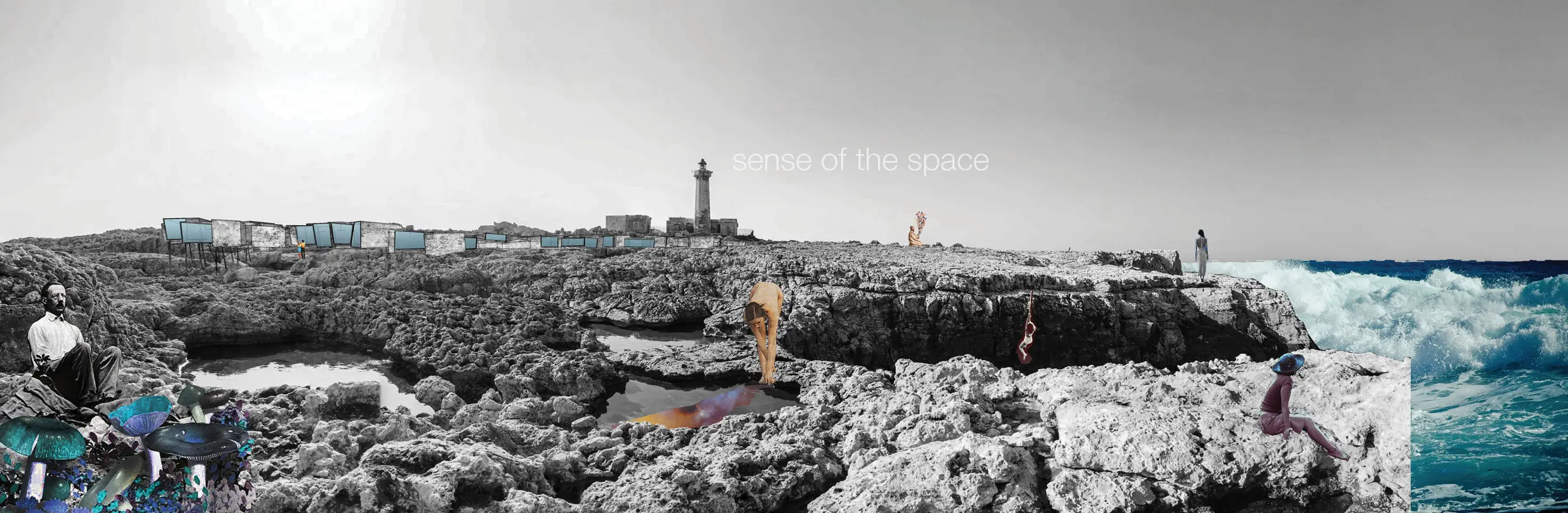
The project is located within a coastal landscape where cliffs gradually transform into earth as the terrain rises from the sea toward the lighthouse. Positioned along this transitional edge, the architectural intervention acts as a mediator between the natural environment and human presence.
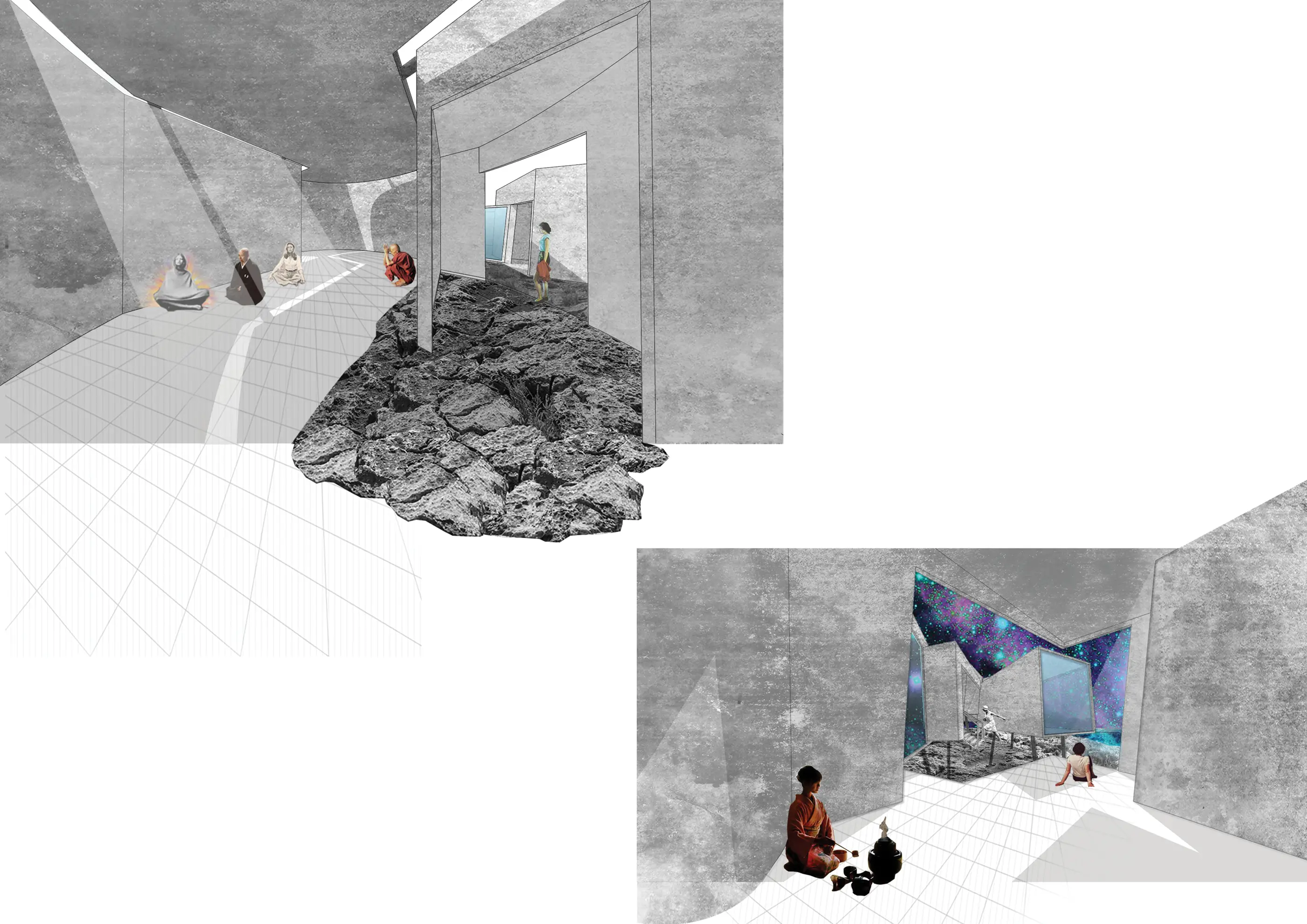
Objective visual space is gathered through classical geometrical forms such as the square and the sphere. While these forms organize perception, they also escape purely visual interpretation and begin to operate as an extension of the site’s topography. Their seemingly coincidental arrangement echoes the sharp, dramatic and repetitive character of the surrounding natural landscape. The materiality of the place is reorganized to create inhabitable spaces that integrate with the environment in which they are inserted.
“I enter a building, see a room, and — in a fraction of a second — have this feeling about it… We perceive atmospheres through our emotional sensibility — a form of perception that works incredibly quickly, and which we humans evidently need to help us survive.”
— Peter Zumthor
Within this context, the project introduces a meditation space. Untouched nature is often perceived as an idealized condition where human activity recedes in importance. The meditation space aims to create a timeless and vacant landscape where visitors can experience a purified and intensified sensory environment. Through this condition, architecture becomes a threshold to the perception of unspoiled natural beauty.
At the same time, the preservation of the natural environment carries ethical significance, shaping both the design approach and the ongoing life of the project. The architecture does not dominate the landscape; rather, it frames and reveals it, allowing visitors to experience the atmosphere of the place through multiple senses.
Read more