Immo
Commercial & Office
This project involves the adaptive reuse of a detached residential building, where the existing structural frame has been preserved and repurposed for office use.
Location
Bodrum, Türkiye
Year
2015
Category
Commercial & Office
Status
Built
Area
150
m2
Photo
Gürkan Akay
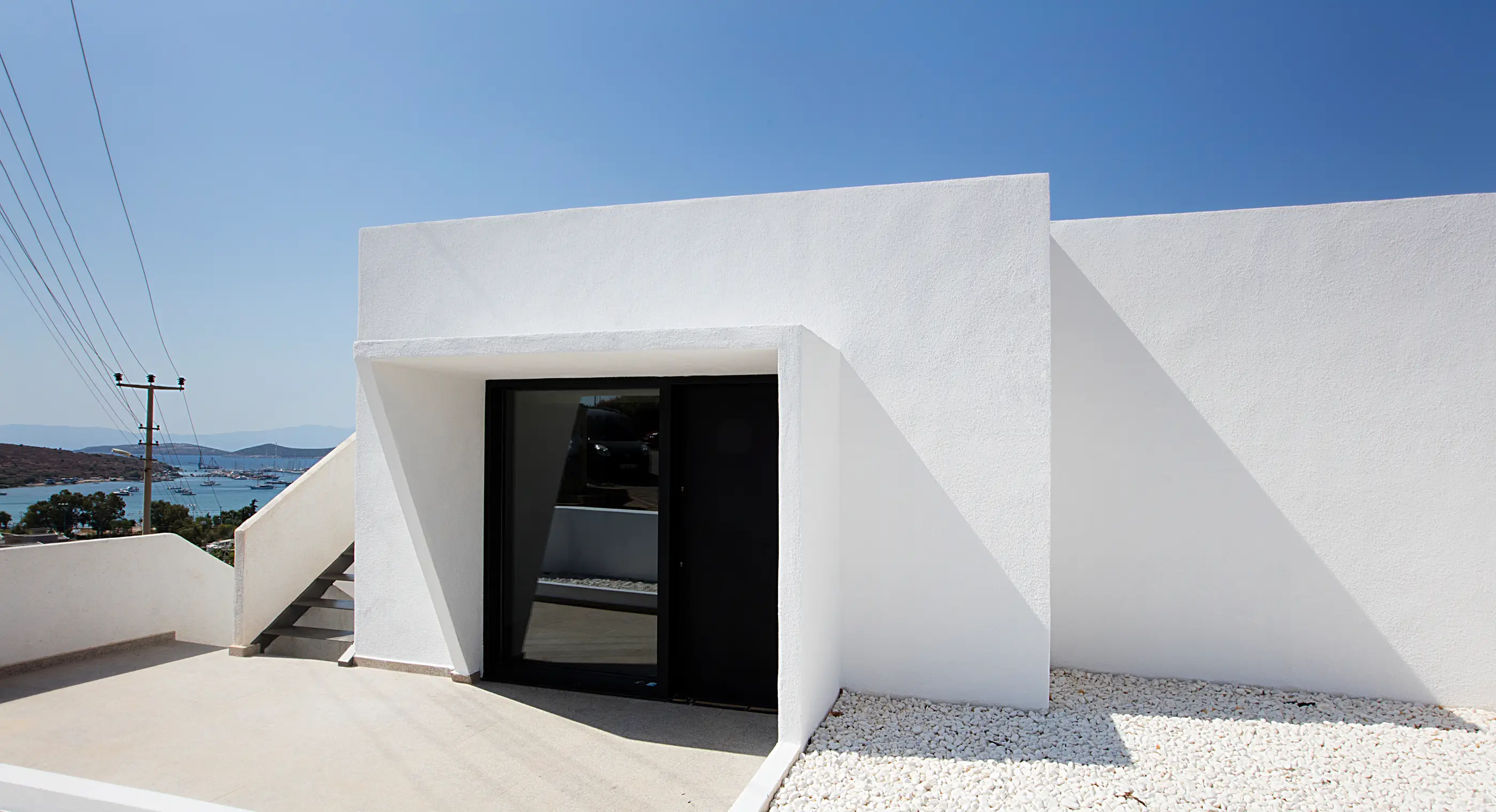
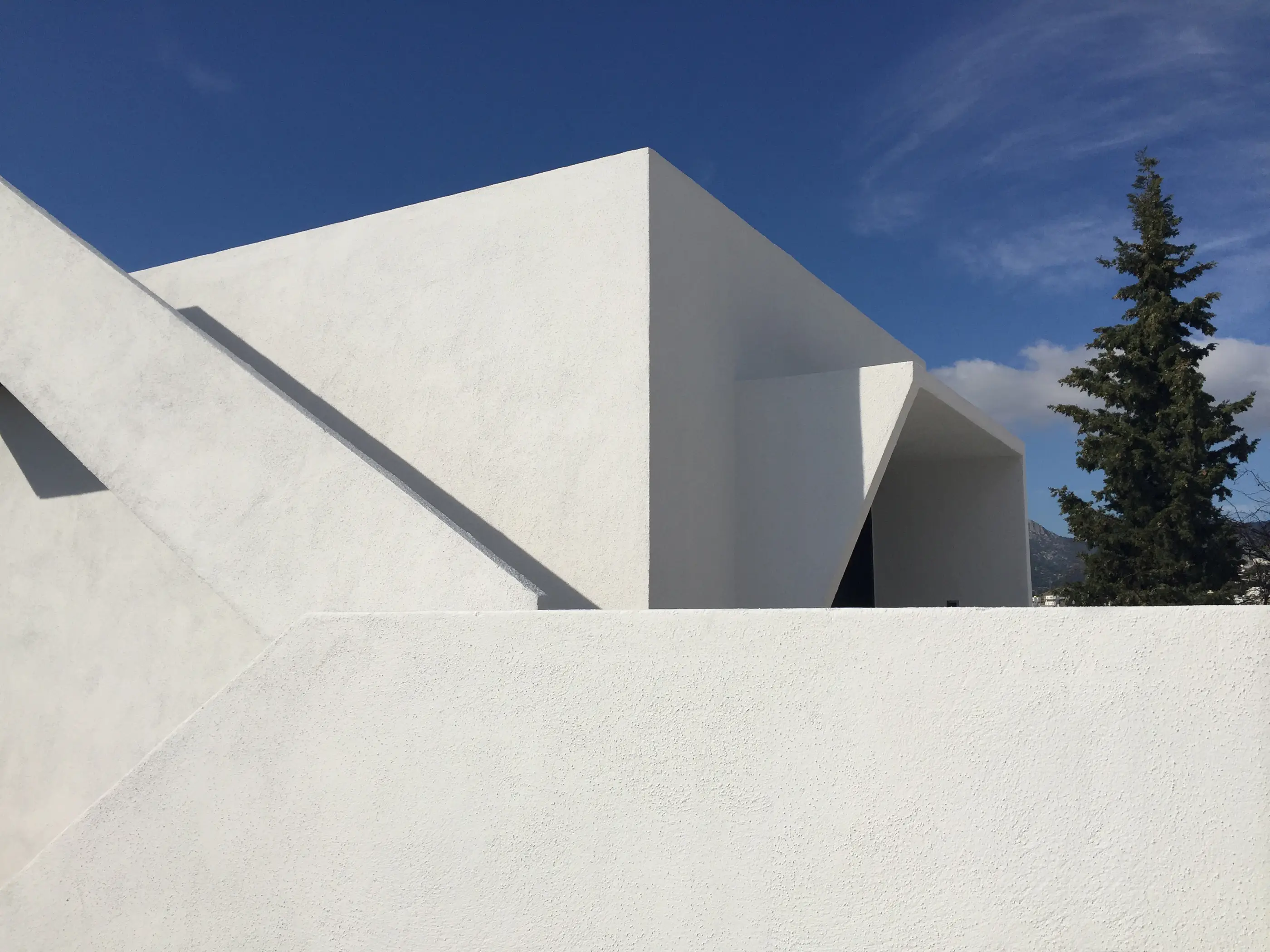
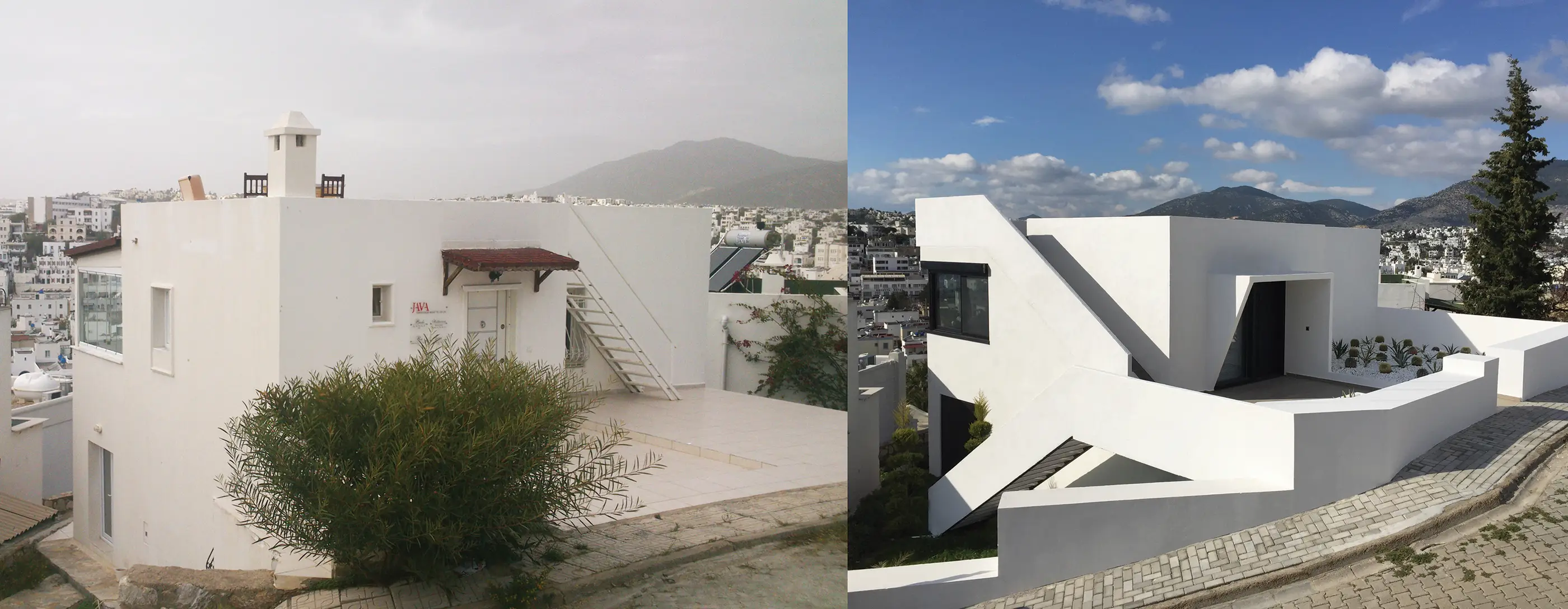
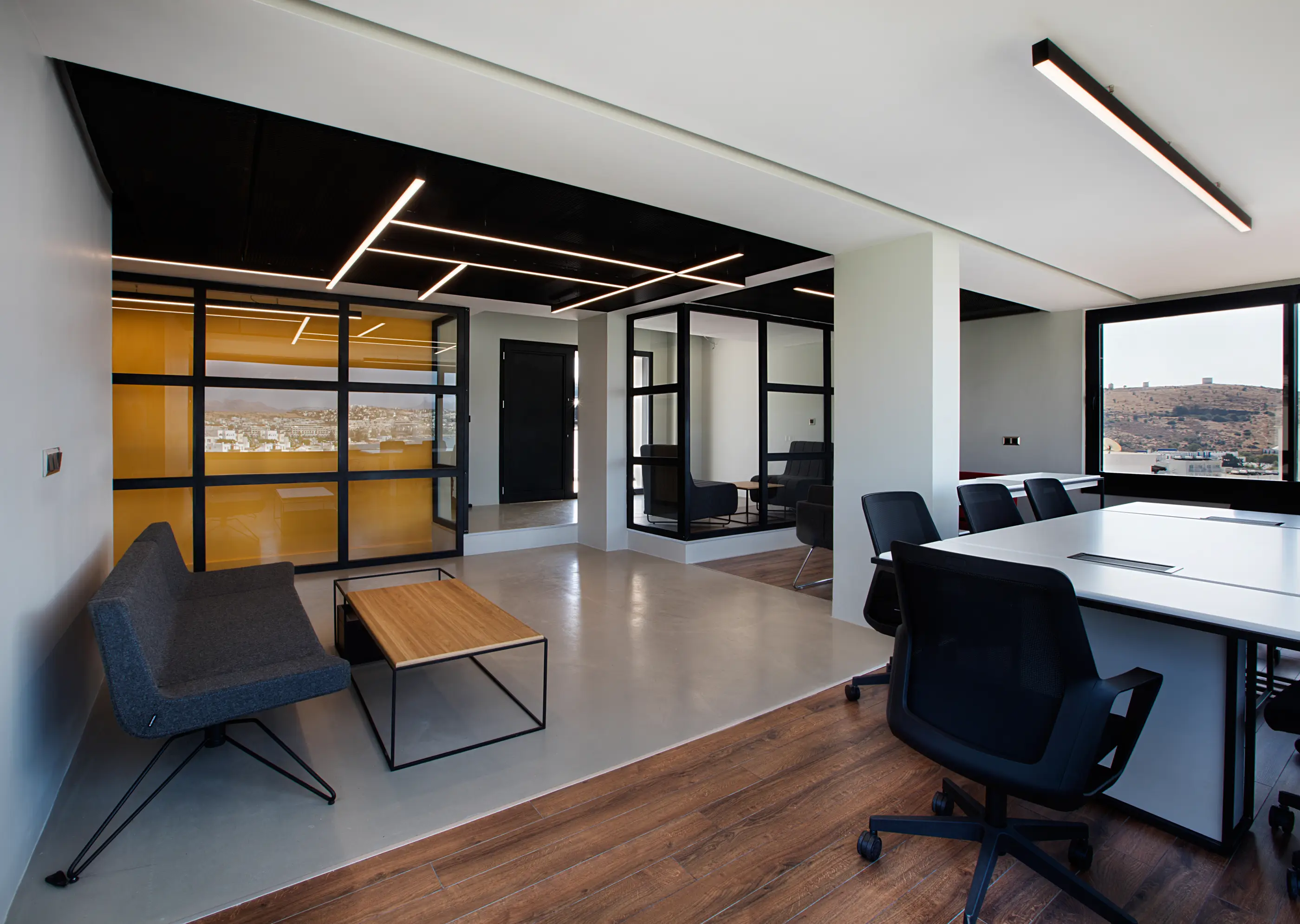
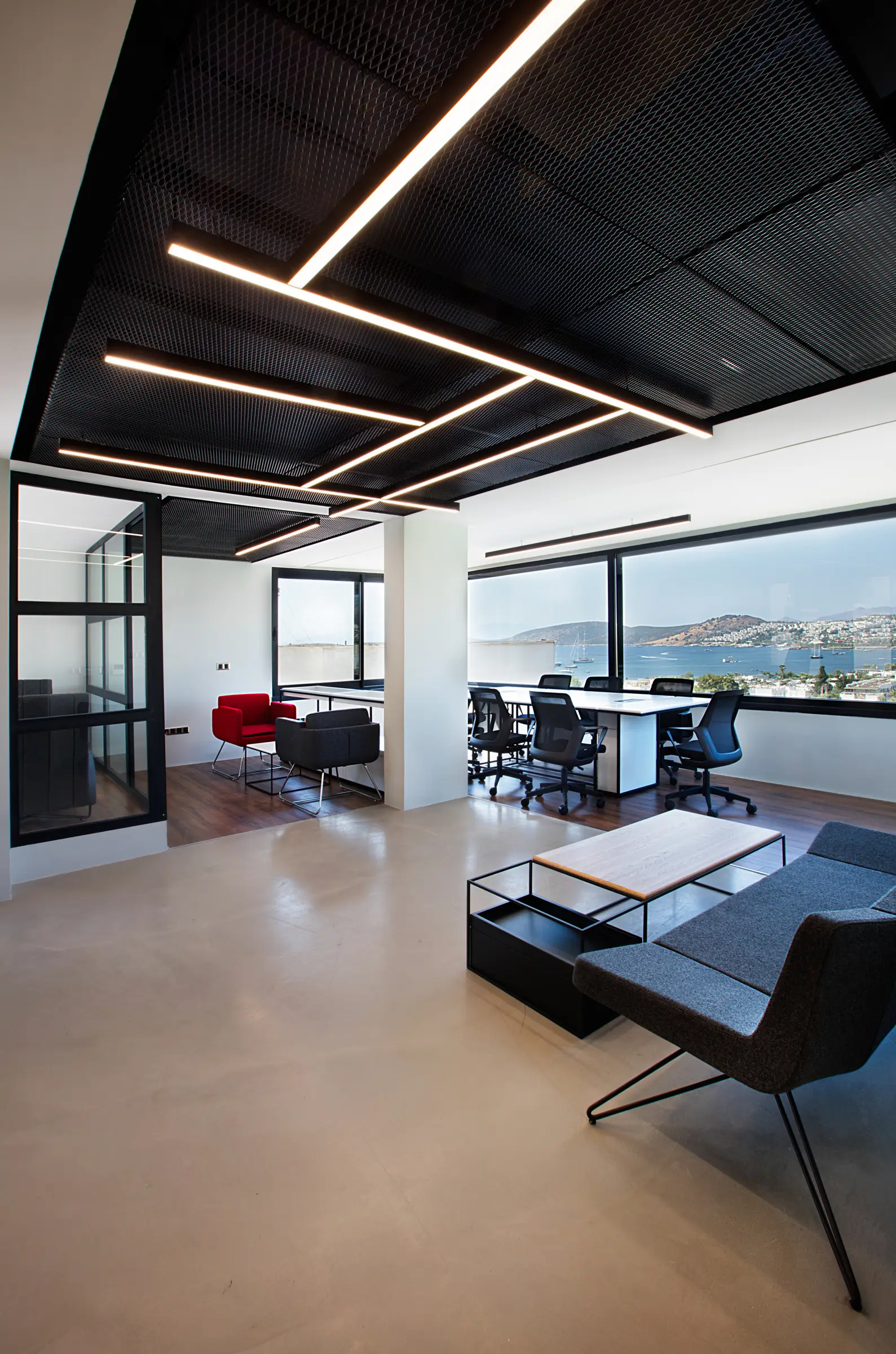
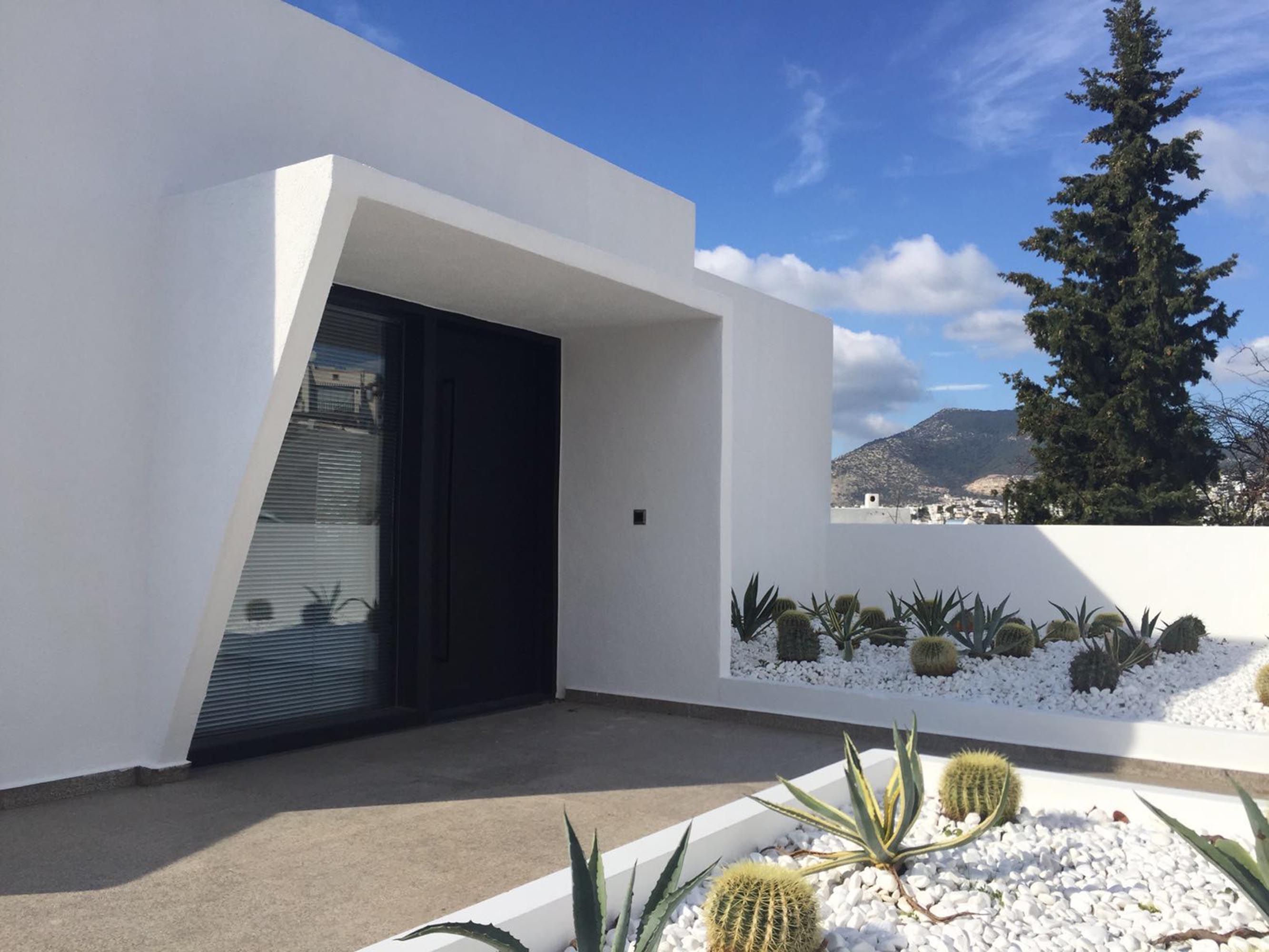
Located in the Gümbet area of Bodrum with a sea view, this project involves the adaptive reuse of a detached residential building, where the existing structural frame has been preserved and repurposed for office use. The design adopts a clear and straightforward architectural language, aiming to meet functional requirements while redefining the spatial character of the building. The transformation can be evaluated through functional, spatial, and structural interventions.
Functionally, reassigning a new program to an outdated residential structure presents an alternative mode of production. The transition from housing to office use reactivates the building within everyday life, giving it a renewed purpose.
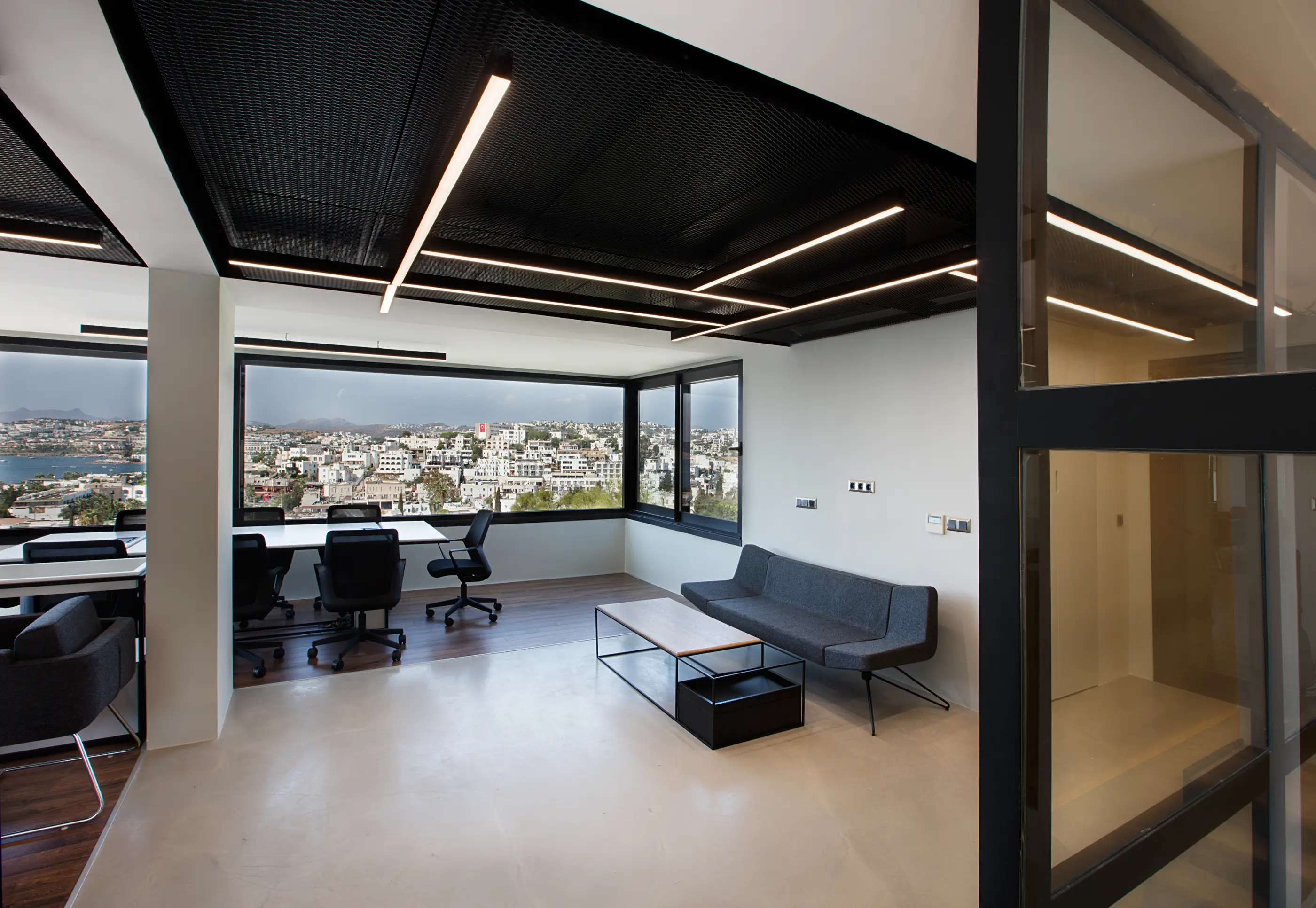
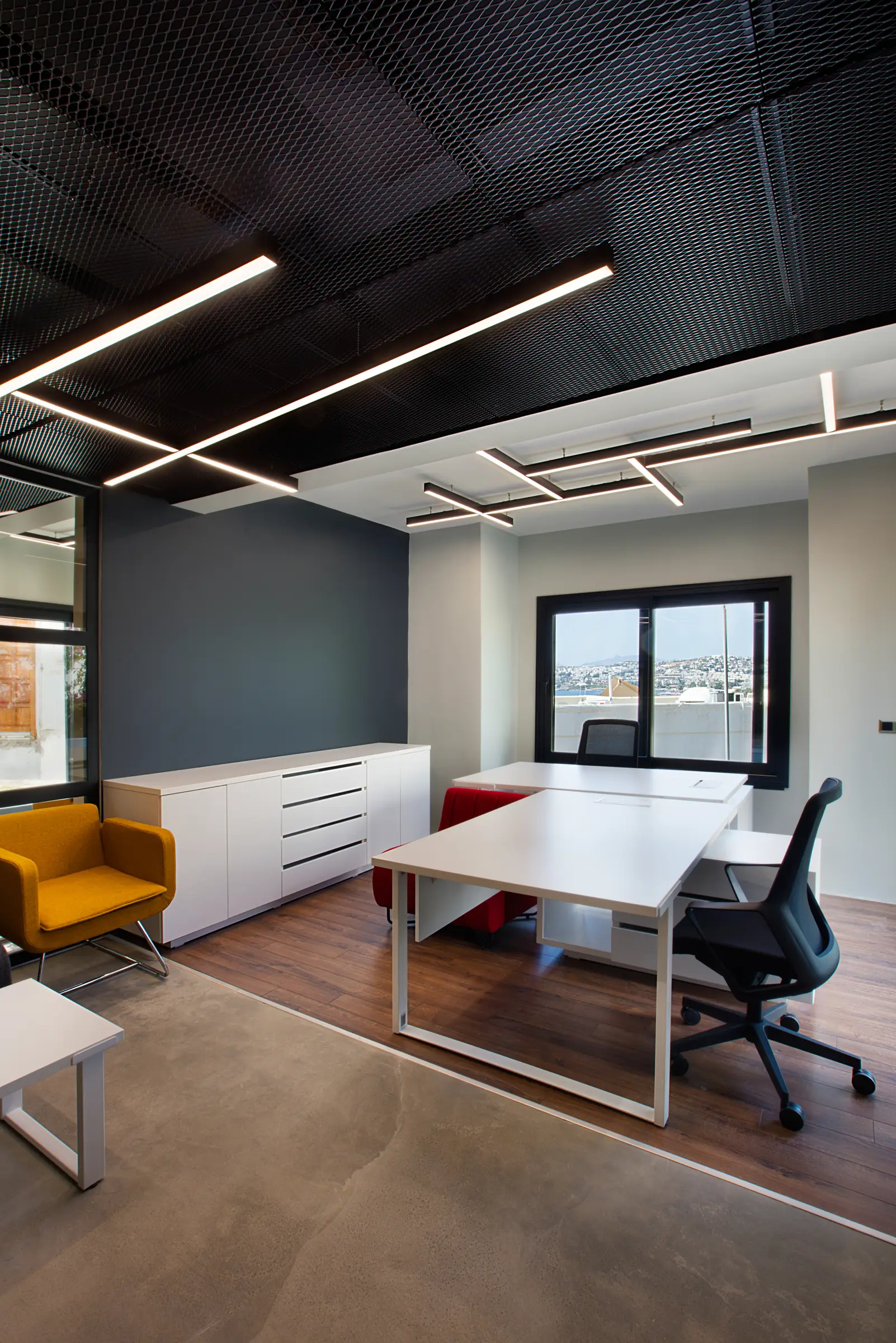
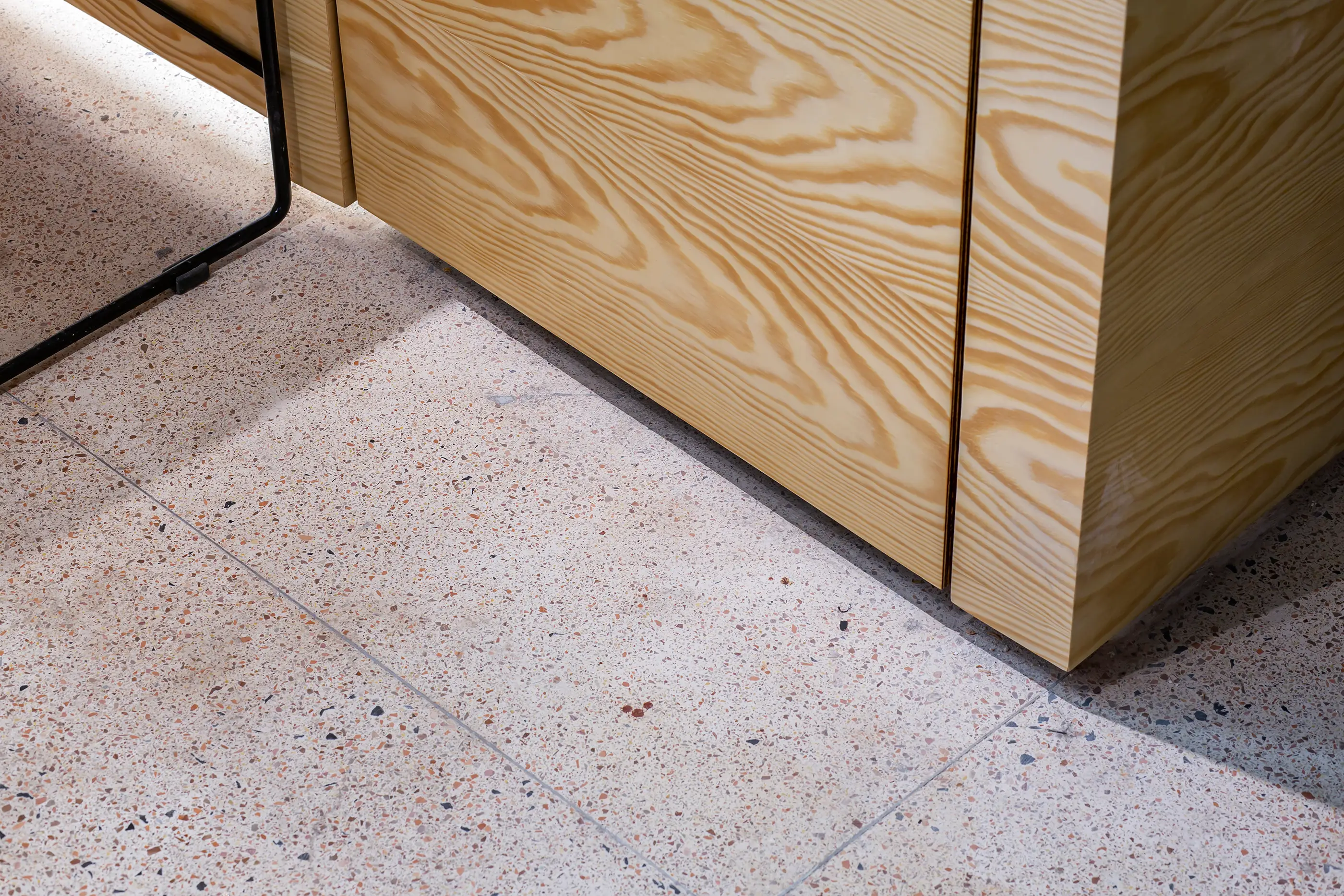
In terms of spatial transformation, interior partitions that once defined small, residential ოთახs and dark corridors were removed to create open and flexible office spaces. The ground floor is organized as a reception area including a welcome desk, waiting and lounge spaces, and a meeting area. Taking advantage of the panoramic sea view, large-scale glazing systems were introduced. An open-plan layout was adopted on this level, where spatial differentiation is achieved through glass partitions, material transitions on the floor, and furniture arrangements rather than solid walls.
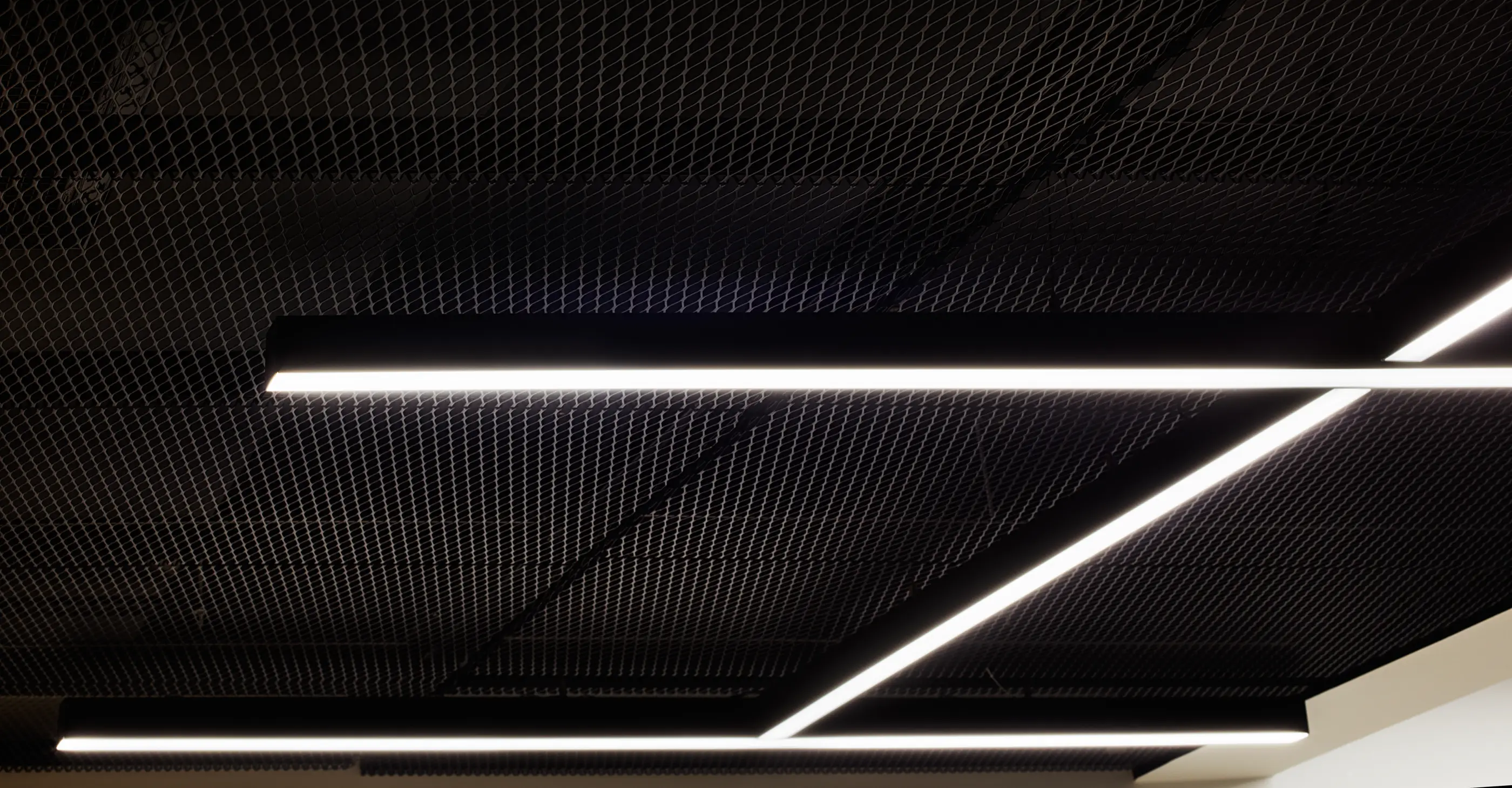
The basement level accommodates two workspaces, a manager’s office, a kitchen, wet areas, and a technical room. Workspaces on this level are directly connected to the lower garden, and transparent partitions are used to maintain visual continuity. The lighting design is based on linear LED profiles that provide both general illumination and spatial definition. Suspended ceilings are treated with metal mesh panels in areas accommodating mechanical systems, while gypsum board ceilings are used elsewhere.
Structurally, as the existing system had not reached the end of its lifecycle, the approach focused on preservation rather than demolition. In this sense, the project aligns with sustainable design principles by reusing the existing building stock, offering both environmental and economic benefits. Certain independent structural elements were reconfigured: the original reinforced concrete interior staircase was removed and replaced with a steel staircase. Externally, the existing stair connecting the terrace at the front façade was removed, and a new steel staircase was introduced along the side façade, linking the lower garden, upper garden, and terrace. Additionally, a canopy element was designed to define and enhance the building’s main entrance.
Read more
Publications